
List of Abbreviations
APSFR Areas of Potential Significant Flood Risk
CDPs Catchment Delivery Plans
DAERA Department of Agriculture, Environment and Rural Affairs
The Department Department for Infrastructure, formerly the Department for Regional Development
FRMP Flood Risk Management Plan
GIS Geographic Information System
IDM Integrated Drainage Model
LDP Local Development Plan
LWWP Living With Water Programme
NI Northern Ireland Audit Office
NIFRS Northern Ireland Fire and Resue Service
PPS Planning Policy Statement
PSNI Police Service for Northern Ireland
SPPS Strategic Planning Policy Statement
SuDS Sustainable Drainage Systems
TEO The Executive Office
TRAM Transport and Road Asset Management
Glossary
NI Water (formerly Water Service) NI Water is responsible for the delivery of water services in Northern Ireland. This involves the abstraction, treatment and distribution of around 575 million litres of water and the collection and treatment of 340 million litres of wastewater each day, utilising a large network of around £3.7 billion of capital assets. These assets include water treatment works, reservoirs, and water and sewerage mains.
Flood Risk Management Plan A plan that identified flood hazards and risks and a range of measures to manage flood risk. The preparation of this is a requirement of the Water Environment (Floods Directive) Regulations (Northern Ireland) 2009.
Integrated Drainage Modelling Catchment scale modelling that replicates the sources of water to model the flow paths and location of flooding that occurs under existing conditions. The model can then be used to assess how the risk of flooding could be mitigated by a range of interventions to determine the optimum solutions.
Rivers Directorate The Rivers Directorate joined the newly formed Department for Infrastructure in 2016, transferring from the then Department of Agriculture and Rural Development.
Sustainable Drainage Systems A system for managing surface water runoff by replicating natural processes, rather than piping the water away, reducing flood risk, filtering pollutants and providing wider environmental benefits like green spaces and biodiversity.
Types of flooding Fluvial defines out-of-river flooding; pluvial defines surface water/overland flow; and out-of-sewer defines the exceedance of storm or foul sewer capacity.
Northern Ireland Audit Office
Executive Summary
Background
1. Flooding is one of the most significant natural hazards in Northern Ireland. An estimated 45,000 properties are located within natural river and coastal flood plains with 1 in 20 properties currently considered to be at risk from flooding from rivers or the sea. Another 36,000 properties are at risk of flooding from reservoirs and 24,500 at risk from surface water flooding. Current understandings of global climate change and its impact on Northern Ireland suggest the nature of this risk may significantly increase in future decades.
2. The Department for Infrastructure (the Department) is the statutory drainage and flood defence authority for Northern Ireland. To deliver on this responsibility the Department takes a lead on the design of multi-year Flood Risk Management Plans, which coordinate activities across a range of public sector bodies that make a contribution to managing flood risk. These objectives and activities are framed around three main principles (known as the “Three P’s” of flood risk management): Prevention, Protection and Preparedness.
3. The Prevention principle is the intention that development should be managed so that it does not result in new or increased flood risk. This can be achieved through ensuring the planning system takes adequate account of flood risk in its decision-making. The Department has an important contribution to make towards achieving this, both in relation to its responsibilities for regional planning policy development and performance monitoring, as well as in relation to its role as a statutory consultee to planning applications.
4. The Protection principle relates to the use of flood defence infrastructure to protect people or properties from flood risk. Once built, this infrastructure must be inspected and maintained on an ongoing basis. Within the Department this involves inspecting and maintaining a range of different flood defence assets managed primarily by its Rivers Directorate and Transport and Roads Asset Management Group (TRAM).
5. Preparedness relates to the arrangements that are in place to manage flooding when it occurs. Since 2013 the Department has undertaken significant work in developing Central and Local Government Preparedness. This includes working closely with emergency planners and resilience colleagues across all councils and emergency responders, including the development of over 50 Community Resilience Groups. The Department is the Lead Government Department for response to severe weather events and provides specialist staff to support management of these events.
6. This report focuses on the Department’s performance in supporting the first two principles: Prevention and Protection. These represent the areas where most public money is invested, and where we consider that there is greatest scope for our recommendations to support the Department in enhancing its management arrangements.
Key findings
7. The previous two Flood Risk Management Plans and their associated monitoring frameworks have been focused on output-based targets and performance indicators. The Department’s Flood Risk Management Plans for 2015–21 and 2021–27 have provided a framework for managing flood risk and are supported by monitoring that tracks delivery against targets. However, targets and indicators are predominantly output-based, and reporting tends to describe activity completed rather than consistently setting out intended outcomes or evaluating effectiveness. Reporting also does not consistently explain the implications where actions are delayed or not delivered (including that, where an objective is not delivered, the underlying flood risk remains unchanged). This limits transparency for external stakeholders and makes it more difficult to evidence value for money at a strategic level. Future plans could be strengthened through clearer outcome-focused and measurable targets and more systematic evaluation and reporting of progress against strategic objectives.
8. The Department could do more to oversee the extent to which development is being undertaken in areas of flood risk and monitor, at a systems level, that appropriate conditions are adhered to. Responsibility for development management in flood risk areas is shared between the Department and local councils. The current arrangements rely on councils applying and monitoring flood risk policies within their decision-making processes. Under a Planning Direction, councils must notify the Department if a planning decision significantly prejudices the implementation of the Local Development Plan or where, under specified circumstances, there has been a significant objection by a government department or statutory consultee to the application. However, outside such cases, consolidated information on approvals in flood risk areas, the mitigations or conditions applied, and follow-up arrangements are not routinely available in a form that supports system-level assurance and transparency. Improved information sharing and reporting arrangements would strengthen oversight of how flood risk policy is operating in practice.
9. Flood Maps could be updated more quickly after the completion of new projects to ensure all stakeholders have access to up-to-date information about flood risk. The Department’s Flood Maps (NI) are a key tool for planning and managing flood risk, widely used by councils, developers and the public. While the maps are generally well regarded, updates following the completion of new flood defence schemes can be delayed by several years. Ensuring that flood maps reflect the latest infrastructure and risk data is essential for informed decision-making and for maintaining the credibility of the Department’s flood risk management arrangements. Accelerating the update process would support better risk assessment, enhance public confidence in the system, and enable more effective planning and development control.
10. Funding pressures have meant that Living With Water has been stood down as a structured Programme and the infrastructure planned to be delivered within the programme will not be delivered in the original timescale. The Living With Water Programme was established to develop a strategic drainage infrastructure plan for Belfast to protect against flooding, enhance the environment and facilitate growth. Delivery of planned projects is being taken forward by the Department and NI Water: this has affected the pace and scale of improvements in drainage infrastructure. The Department and its partners continue to pursue key projects, but progress is now dependent on available budgets and will not be in line with the original envisaged timeline. The reprioritisation of work has resulted in some major infrastructure upgrades being postponed, with implications for the achievement of strategic targets and the management of flood risk in affected areas. The Department is aware of the risks associated with reduced delivery and continues to monitor the impact of funding constraints on programme outcomes.
11. Emerging areas of focus within flood risk management - sustainable urban drainage and catchment-based management - remain at a relatively early stage of design and implementation. The Department has identified sustainable drainage systems (SuDS) and catchment-based management as key elements of future flood risk management. The natural flood management measures provide environmental benefits and can complement hard defences, but evidence shows limited standalone flood risk reduction. Further work is required to develop guidance, evaluate pilot outcomes, and integrate these measures into mainstream delivery. The transition to these new approaches will require sustained commitment and collaboration across agencies. Legislative changes are in progress to support the wider adoption of SuDS, and pilot projects are being used to test new techniques and gather evidence on effectiveness. The Department recognises the need to build capacity, develop expertise, and ensure that councils and other stakeholders have access to appropriate advice and support as these approaches are scaled up.
12. Efforts to develop a strategic and coherent framework for managing surface water flood risk have been ongoing, but responsibilities for certain flooding scenarios are still unclear, and coordination between agencies is not fully established. The absence of a clear lead organisation for some types of surface water flooding has resulted in gaps in response. This fragmentation limits the effectiveness of surface water management across Northern Ireland. Addressing these gaps is essential to ensure a more integrated and resilient approach. The Department and its partners are aware of the need for improved governance, clearer assignment of responsibilities, and the development of a comprehensive strategy to manage surface water risk in a joined-up manner.
13. The Department is not able to deliver the intended level of inspection and maintenance for existing flood defence assets. The Department manages a substantial network of flood defence assets but has faced challenges in meeting inspection and maintenance targets. Funding and staffing pressures have required the Department to prioritise inspection and maintenance activity and, as a result, not all targets have been achieved across the flood defence network. The Department has responded by strengthening its risk-based approach, including dedicated Flood Risk Management resource planning, a critical review of the Asset Management Plan, and updated watercourse inspection and maintenance arrangements. However, sustained resource constraints may continue to limit the pace at which lower-risk assets can be addressed and could increase long-term costs if deferrals persist.
14. The cost and timescale for delivery of new flood defence assets is often significantly in excess of final estimates. Analysis of completed flood defence projects built by Rivers Directorate shows that final costs and delivery times frequently exceed initial estimates. Factors contributing to these variances include economic uncertainty, landowner problems, issues with contractors and unforeseen issues during construction. Inconsistent post project evaluation documentation may further limit the Department’s ability to learn lessons and improve future delivery. Strengthening post project evaluation documentation will be important to ensure value for money and timely completion of future schemes. Improving the accuracy of cost and time estimates, ensuring robust challenge and oversight at the planning stage, and consistently completing post project evaluation documentation will support better outcomes and more reliable delivery of flood defence assets.
Conclusion
15. We recognise the significant efforts made by the Department and other stakeholders to enhance the management of the diverse range of sources of flood risk in Northern Ireland. We also recognise the significant impact that financial resourcing pressures and uncertainty have on the deliverability of intended actions within specific timescales.
16. However, our examination highlights a number of issues which limit the ability of the Department, and other organisations involved in flood risk management, to demonstrate that their activities are delivering long-term value for money in a systematic and comprehensive way. These include reliance on output-focused strategic planning and performance monitoring, limited central oversight of development within flood risk areas, constraints in inspection and maintenance activity, and weaknesses in the estimation and management of some capital projects. Addressing these issues would strengthen assurance, support more effective prioritisation of resources, and enable a more consistent and transparent assessment of the impact and long-term value of flood risk management activities.
Recommendations
Recommendation 1
The Department should ensure that the next Flood Risk Management Plan is outcomes based and supported by a set of SMART targets and other indicators so that the performance of all delivery organisations and the impact of expenditure can be evaluated. An annual progress report should be published to support transparency and accountability.
Recommendation 2
The Flood Maps (NI) are a key tool for flood risk management used by the Department, other government departments, councils, developers and the public. Therefore, we recommend that the maps are fully updated within 18 months of the completion of a new major flood alleviation scheme.
Recommendation 3
The Department should work collaboratively with council planning authorities to develop and implement information sharing procedures that ensure the Department is regularly provided with information relating to development applications that are approved within areas known to be subject to a flood risk. This information should enable the Department to continuously assess that the objectives of the Strategic Planning Policy Statement are being complied with and flood risks are being effectively managed.
Recommendation 4
The Department, in partnership with other relevant stakeholders, should establish a timescale within which it will review the current approach and management of surface water flood risk. This review should seek to identify any weaknesses and gaps in current arrangements and ensure the future joined-up management of surface water flood risk.
Recommendation 5
The Department should ensure that it has appropriate arrangements in place to evaluate the benefits, costs and intended impacts of each of the SuDS pilots it implements to embed the successes into future development and management of such projects.
Recommendation 6
The Department should establish arrangements that ensure suitable guidance is available to councils in relation to planning applications that are supported by soft SuDS measures.
Recommendation 7
To enhance the Rivers Directorate’s data and ensure timely and accurate data is available for decision-making we recommend that the Department undertakes a detailed evaluation of the costs and benefits that would be incurred in upgrading current systems.
Recommendation 8
The Department should review its processes for the preparation of cost and time estimates for capital works. This review should seek to ensure that sufficient challenge and oversight is provided at the planning stage in order that estimates are as accurate as possible. The Department should also ensure that all project documentation relating to new flood alleviation assets is consistently completed and reviewed.
Recommendation 9
The Department should, in partnership with relevant stakeholders, support the funding and delivery of a prioritised programme of Integrated Drainage modelling to identify new opportunities to address drainage issues. The Department and NI Water should agree between them who is best placed to deliver this work so that it is aligned to the needs of all parties and efficiently delivered.
Recommendation 10
The Department should establish a timescale for the development of Natural Flood Management guidance, and for the co-development of guidance on agricultural land support measures with DAERA.
Recommendation 11
Where internal capacity is insufficient to deliver planned services, we recommend that the Department ensures that it fully exploits any arrangements it can establish with external partner organisations to enhance capacity, including the use of specialist agency staff.
Part One:
Introduction
Flood risk in Northern Ireland
1.1 Flooding is one of the most significant natural hazards in Great Britain and Northern Ireland. There are four main sources of flooding: rivers; the sea; surface water (when rainwater cannot drain away); and groundwater (where the water table rises above ground level). The Department has identified 12 areas of Potential Significant Flood Risk in Northern Ireland, with around 45,000 properties subject to some form of flood risk within these areas. The nature of this risk depends on location. For example, Belfast and Newry are at flood risk from river, surface water and coastal sources, while in Lurgan the main risks are from small watercourses exceeding capacity, culverts unable to convey flood flows and surface water.
1.2 When flooding occurs it poses a significant risk to people’s lives, livelihoods and wellbeing. It can also result in substantial damage to critical local infrastructure. The 2021 Northern Ireland Climate Change Risk Assessment highlighted current risk to 473 water infrastructure sites, 3 power stations, 7 electricity substations and 270km of railways from flooding.
1.3 The Met Office predicts that within Northern Ireland, climate change is going to result in warmer summers, wetter winters, and more frequent extreme rainfall events. This is considered likely to lead to an overall higher level of flood risk in Northern Ireland and an increased frequency of flood events. The draft Climate Change Action Plan for Northern Ireland (2023-27) sets out the need to adapt to and mitigate this increased risk. It notes the need to ensure infrastructure is designed and constructed to be more resilient to climate change and able to withstand the growing challenges presented by flooding, extreme weather events and the rising global temperatures. The Department currently estimates that by 2080, the number of properties subject to flood risk could increase by another 14,800 to nearly 60,000.
Flood risk management in Northern Ireland
1.4 The Department has statutory responsibility for drainage and flood defence in Northern Ireland (see Appendix A). It is responsible for reducing the risk to life and damage to property caused by flooding. To fulfil this responsibility the Department coordinates interdepartmental work by taking a lead in the development of multi-year Flood Risk Management Plans (FRMP). These Plans set the overarching objectives and targets for flood risk management in Northern Ireland, which are currently built around the “3 P’s” of flood risk management:
- Prevention
- Protection
- Preparedness
1.5 The Prevention approach is intended to minimise, as much as possible, the extent to which people and properties are subject to flood risk. A particular emphasis is placed upon ensuring that development and urbanisation do not unnecessarily increase flood risk directly within the area in which they occur or indirectly increase flood risk in other areas. In the Department’s role as a statutory consultee in the planning process, Rivers Directorate provides advice on matters of flood risk and drainage to the Planning Authorities. This advice is a material consideration in their decision-making processes. Through the preparation of a Flood Risk Assessment/Drainage Assessment, applicants must demonstrate to Planning Authorities that there are adequate measures to manage and mitigate any increase in flood risk arising from new development.
1.6 Flood protection approaches are intended to ensure that people and properties in areas of known flood risk have appropriate protection to reduce the likelihood and consequences of flooding. Traditionally, this has involved the construction of large scale infrastructure to provide cover for a specific area. However, increasing attention is being placed in working within wider natural environments and upstream of the locations where flooding may occur to better manage water before it gets to these locations of flood risk. Typically, these are smaller in scale than traditional defence projects and are best employed in partnership with traditional defences. They can also often provide additional environmental benefits within the locations where they are built.
1.7 Preparedness approaches are based on the recognition that it is not possible to prevent or protect against flooding entirely. Consequently, there is a need to be prepared and ensure effective emergency responses are provided to protect people and properties, and to support restoration after the flooding. Since 2013 the Department has undertaken significant work in developing Central and Local Government Preparedness. This includes working closely with emergency planners, councils and emergency responders. The Department is the Lead Government Department for response to severe weather events and provides specialist staff to support management of these events.
1.8 In the other areas of the UK there has been increased attention in recent years placed on increasing the utilisation of natural water management mechanisms to supplement the protections offered by built flood defence infrastructure. This change in approach is evident in Northern Ireland within the current FRMP:
“Although flood risk has historically been addressed reactively by providing local engineered solutions to solve repeated flooding, the Floods Directive’s approach to flood risk management is pro-active…
As the construction of flood defences can be very expensive and may defendonly specific localised areas, there is widespread interest in working with natural processes upstream of flood risk areas to hold water back...
Such solutions may individually be small in scale but when combined, may provide substantial flood alleviation benefits and contribute towards water quality and environmental benefits.”
1.9 A range of statutory bodies is involved in delivering the various programmes intended to provide prevention, protection and preparedness. These organisations work together across a number of different forums to coordinate flood risk management work (see Figure 1).
Figure 1: NI Flooding Groups
| Group Name | Aim |
|---|---|
| Drainage Council (NI) | Responsible for ensuring the impartial and uniform application of the Rivers Directorate drainage and flood defence programme throughout Northern Ireland. Responsible for deciding/designating which watercourses and sea defences should be maintained by the Rivers Directorate at the public’s expense. |
| Regional Community Resilience Group | To support communities in relation to their understanding of flood risk within their community, flood warning and informing, self help and limitations of infrastructure. |
| Flood Strategy Steering Group | To bring together officials from DfI (Core, Rivers, Roads, and Planning), NI Water, TEO, DAERA, NI Direct, PSNI, NIFRS and local government. Its role is to: • provide strategic direction on flood preparedness and support Floods Directive implementation; • develop strategies to improve flood response; • guide Emergency Planning Groups and related resilience groups; • monitor and review response effectiveness after major events; • ensure strategic level communication between responders; and • align activities with the Climate Change agenda. |
| Floods Investment and Planning Group | This group is made up of the Department and NI Water and is responsible for providing a co-ordinated approach to identifying the flooding issues that need to be addressed on a multi-agency basis. The Flood Investment and Planning Group uses this knowledge to provide advice to the Flood Strategy Steering Group. This group was stood down in 2022-23 and the activities and actions transferred to business as usual or the Severe Weather Group. |
| Flood Directive Technical Stakeholder Group | To support senior management in addressing the Floods Directive requirements including the delivery of the 2 nd Cycle of the Flood Risk Management Plan. |
| Stormwater Management Group | To ensure a strong cross agency/cross departmental commitment which will co-ordinate and oversee the development and implementation of sustainable stormwater management systems within Northern Ireland. |
Source: NIAO based on the Department’s information.
The costs incurred by the Department in managing flood risk have increased in recent years
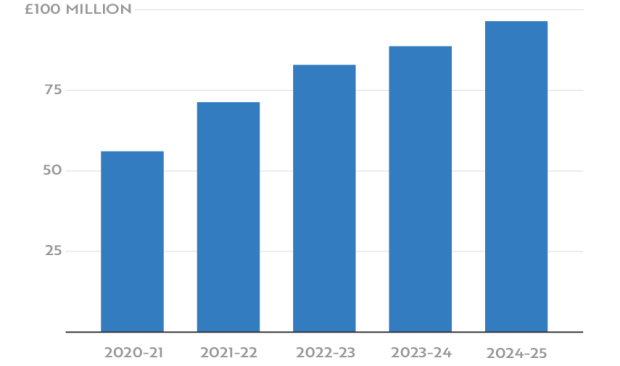
1.10 In 2024–25, the Department spent £96 million on flood risk management activities. In real terms, this represents a 73 per cent increase since 2020–21, continuing an upward trend in expenditure over recent years (see Figure 2 and Appendix C). These figures reflect spending within the Water and Drainage Policy Division, NI Water, and the Transport and Roads Asset Management Group (TRAM), including the roads drainage charge. They do not include expenditure by local government or other public bodies and therefore do not represent total public sector spending on flood risk management in Northern Ireland.
The current Flood Risk Management Plan builds upon work started in the 2015-21 Plan
1.11 The current FRMP covers the 2021-27 period. The previous FRMP, which ran from 2015 to 2021, represented the beginning of the Department’s transition to a more proactive approach to flood risk management, based on a map-based flood risk assessment for Northern Ireland as a whole. The completion of that FRMP was considered to be a significant milestone and to have established a momentum that could be carried forward into the current second cycle FRMP (2021-27).
1.12 The specific objectives of the FRMP 2015-21 were based on a set of 10 regional measures to be undertaken across Northern Ireland as a whole, supplemented by 68 specific measures at a more local level. During the lifetime of the FRMP 2015-21 the number of local measures to be delivered was decreased from 68 to 47. This decrease was driven by a number of reprioritisations of schemes through the life of the project.
1.13 Upon the completion of the FRMP 2015-21, the Department compiled a final Progress Report, that utilised a Red, Amber, Green reporting approach to analyse its progress against its objectives. The Report’s overall conclusion was that progress against both regional and local measures was “good”, albeit with some areas where the full programme of work intended had not been delivered.
1.14 The Report sets out that progress against six of the ten regional measures was on track, with the remaining four areas being classified as Amber and subject to concern. At a local level, the report concluded that “good” progress had been made against the intended programme, with 28 projects assigned a Green rating. A further 14 projects were assigned an Amber rating, and two assigned Red. The Report highlights funding constraints and availability of resources as key issues for those measures where progress was not completed as intended.
1.15 The approach used to establish targets for the FRMP 2015-21 and report performance against these demonstrated a commitment to managing flood risk and provided evidence of progress in some areas. However, the reporting framework for setting and measuring these targets was largely output-focused, and many of the high level objectives were not articulated in SMART terms. This resulted in the evaluation being heavily descriptive in terms of outlining what has been done, with less emphasis on evaluating the outcomes of this work against specific outcome-based targets for the period.
1.16 We consider that this issue is also relevant to the objectives included within the current FRMP 2021-27. It sets out ten high level objectives for the period, framed within three key themes: human health, economic activity, and environment and cultural heritage (see Figure 3). These ten objectives are supported by a suite of measures and activities that are intended to support achievement of the objectives. However, these are again primarily articulated in terms of ongoing delivery of services or activities and achievement of outputs. They are not supported by SMART targets within the FRMP itself. Separately, the inspection and maintenance of existing drainage and flood defence networks and the development of significant flood risk schemes are subject to monitoring. These include timescales and status updates, with each involved organisation setting its own operational targets. The Department told us that as part of the development of the next FRMP it intends to subdivide the measures that are multi-phased and spanning more than one Flood Directive cycle and broaden the target timescales. The Department also intends to introduce a greater number of SMART targets within the plan.
Figure 3: 2021-27 Flood Risk Management Plan objectives
| Reference | Objective |
|---|---|
| Human Health | |
| 1 | To reduce the risk to life, health and wellbeing |
| 2 | To increase awareness and understanding of flooding and its adverse consequences and improve community resilience |
| 3 | To reduce the impact on people caused by the disruption to essential infrastructure and services |
| 4 | To improve recreation and public amenities (when the opportunity arises when undertaking measures) |
| Ecomomic Activity | |
| 5 | To reduce the cost of potential future flood damages to properties and infrastructure |
| 6 | To reduce the economic costs caused by the disruption to essential infrastructure and services |
| 7 | To optimise the economic return on flood risk management investment |
| Environment and Cultural Heritage | |
| 8 | To consider and prepare for the impacts of Climate Change for the main sources of flooding |
| 9 | To support the objectives of the Water Framework Directive and contribute to the achievement of good ecological potential/status for waterbodies |
| 10 | To protect and enhance the natural environment and cultural heritage |
Source: NI Flood Risk Management Plan 2021-2027.
1.17 The 2024–25 progress report shows activity under all ten objectives (Appendix B). Twelve of the 30 flood alleviation projects in Areas of Potential Significant Flood Risk were completed by 31 March 2025. The remaining 18 were in progress, with revised timescales due to the completion of early project stages and updates to feasibility work and business cases. The Department told us that of the 18 delayed measures, eight commenced in April/May 2026. In addition, a significant proportion of work relates to inspection and maintenance of existing drainage infrastructure, which remains essential to the performance of the system and continues from the previous cycle. However, we note the Flood Risk Management Plan does not set SMART targets: the progress report records activity rather than assessing delivery against clear timescales, costs or outcomes.
Recommendation 1
The Department should ensure that the next Flood Risk Management Plan is outcomes based and supported by a set of SMART targets and other indicators so that the performance of all delivery organisations and the impact of expenditure can be evaluated. An annual progress report should be published to support transparency and accountability.
Scope and structure
1.18 The key focus of this review is to assess how effective the Department has been in achieving a more proactive approach to flood risk management, successfully integrating new approaches to supplement and enhance the protection provided by built infrastructure. This overall assessment will be based upon our evaluation of how effective the Department has been in implementing two of the three main pillars, Prevention and Protection, as set out within the FRMP.
1.19 We have focused on Prevention and Protection as they represent the areas where most public money is invested, and where we consider that there is greatest scope for our recommendations to support the Department in enhancing its management arrangements. This does not reflect any consideration of the Preparedness aspect of the FRMP as being less significant or important than Prevention and Protection. Preparedness encompasses a broad and essential programme of work, including emergency planning and the delivery of emergency response services by the Department and its partners during flooding events. It also includes the development of new and enhanced flood forecasting capabilities, the administration of the Home Owner Flood Protection Scheme, and joint leadership with local government through the co-chairing of over 50 Regional Community Resilience Groups. Arrangements are already in place to evaluate performance across these activities, particularly in relation to emergency response, and to make recommendations for continuous improvement.
1.20 This report is structured in the following way:
- Part Two outlines how effectively the Department has managed and delivered its key flood Prevention approaches; and
- Part Three outlines how effectively the Department has managed and delivered its key flood Protection approaches.
Part Two:
Prevention
2.1 Whilst the risk of flooding can never be entirely eliminated, avoiding activities that lead to an increased risk of flooding is a central objective of flood risk management. As climate change increases the likelihood and severity of flood events, decisions about where and how development takes place become increasingly important. The FRMP identifies four main approaches which are intended to contribute to the prevention of flooding in Northern Ireland:
- keeping development outside of flood risk areas;
- ensuring that any development within flood risk areas is suitably managed;
- implementing improved surface water management techniques in flood risk areas; and
- greater use of sustainable drainage systems (SuDS).
2.2 This section of the report provides an evaluation of the progress made to date on implementing these approaches.
Planning policy emphasises that development should be prevented in areas of flood risk
2.3 Northern Ireland has a two-tier planning system where responsibility for development management is shared between the Department and councils. Within this two-tier system the Department’s key responsibilities include the development of regional planning policy and providing strategic oversight, guidance and performance management for the planning system as a whole. Council responsibilities include the development of Local Development Plans (LDP) for their area and making decisions on individual planning applications made within their area.
2.4 The key policy document that coordinates how the planning system works is the Strategic Planning Policy Statement (SPPS) which was first published in September 2015 and recently updated in December 2025. The SPPS must be taken into account by councils in the preparation of LDPs and in their decisions relating to individual planning applications. The SPPS document makes clear that its objective in relation to flood risk is the prevention of future development that may be at risk of flooding itself, or that may increase the risk of flooding elsewhere.
2.5 LDPs are of critical importance to the ability of councils to make sound planning decisions, coordinating necessary development whilst also protecting important landscape and environmental features. Despite their importance, a number of previous Northern Ireland Audit Office reports have noted that the development of these plans has been unacceptably slow. Currently six of the 11 councils have an adopted Plan Strategy and are working towards the Local Policies Plan phase that includes policy and details on settlement limits and zoned land. Only two remaining councils are working towards publication of their draft Plan Strategy. Three councils have published their draft Plan Strategy but to date only one of these councils has submitted it to the Department.
The Department’s Flood Maps (NI) support development planning, help identify areas of significant flood risk, and inform the promotion and design of resilience measures
2.6 To support evidence-based decision-making in the planning system the Department has developed the Flood Maps (NI) interactive map viewer tool. This tool enables users to access the latest flood hazard information available from government and highlights the areas throughout Northern Ireland that are prone to flooding.
2.7 Overall, we found that stakeholders actively used the Flood Maps (NI) to complete planning applications, assess the safety of property assets, and develop mitigation. Stakeholder sentiment about the tool was generally positive, with users indicating to us that they found the maps easy to use and interpret, and that the system used was similar to systems in common usage elsewhere, meaning it was often possible to layer additional information onto the base maps. To enhance the stakeholders’ experience of the Flood Maps (NI), the Department regularly engages with utility companies, gaining feedback on the functionality.
2.8 The Department has arrangements in place to ensure that the maps are updated on a regular basis. The Department reviews and, if necessary, updates the Flood Maps on a six-year rolling programme to ensure that changes in flood risk are identified and that flood risks are managed effectively. It prioritises upgrades based on the delivery of the new flood defence/drainage schemes, and the degree of topographical changes within a catchment area.
2.9 Additionally, where a flood event occurs the Department compares the predictive flood map against actual flood events through the use of aircraft or drones. The Department told us that these comparison results indicated that the predictive flood extents were identical or at least comparable with the historical flood event extents.
2.10 Despite the generally positive feedback about the tool and the update arrangements that are in place, we found that it has taken up to nine years to update the Flood Maps (NI) following the development of new flood defence infrastructure. A number of stakeholders stressed they considered it important that more timely updates were implemented where such schemes were developed.
Recommendation 2
The Flood Maps (NI) are a key tool for flood risk management used by the Department, other government departments, councils, developers and the public. Therefore, we recommend that the maps are fully updated within 18 months of the completion of a new major flood alleviation scheme.
Departmental oversight and understanding of the development that is occurring within areas subject to flood risk could be enhanced
2.11 The Strategic Planning Policy Statement aims to prevent new development in areas of flood risk, or development that would increase flood risk elsewhere. The FRMP reflects this through measures intended to keep development outside areas of known risk and to ensure that, where development does proceed within those areas, it incorporates appropriate mitigations. The Department contributes to this through the provision of flood risk advice as a statutory consultee and through maintaining accurate flood risk information for use by planning authorities.
2.12 Planning legislation provides the Department with certain oversight powers and safeguards within the two-tier planning system to help ensure policy is complied with. For example, councils must notify the Department where statutory consultee advice on flood risk has resulted in a significant objection, or where a proposal would significantly conflict with the Local Development Plan. These notifications allow the Department to consider whether a planning application should be ‘called in’. These powers are intended to address exceptional cases where significant concerns arise during the decision-making process.
2.13 However, in our view these arrangements, while important, do not provide the Department with as full an understanding of development activity within areas of flood risk as is required to comprehensively fulfil its roles within the planning system. Consolidated information on approvals in flood risk areas, the mitigations and conditions applied and follow-up arrangements is not routinely available to the Department in a form that supports system-level assurance and transparency. As a result, the Department cannot assess whether the policy intent set out in the Strategic Planning Policy Statement is being consistently achieved across Northern Ireland.
Recommendation 3
The Department should work collaboratively with council planning authorities to develop and implement information sharing procedures that ensure the Department is regularly provided with information relating to development applications that are approved within areas known to be subject to a flood risk. This information should enable the Department to continuously assess that the objectives of the Strategic Planning Policy Statement are being complied with and flood risks are being effectively managed.
The Living With Water Programme was intended to help support significantly improved protection against surface water flood risk in the Belfast area
2.14 Following severe flooding in Belfast in 2012, the then Department for Regional Development engaged with a number of different public sector organisations to investigate the extent to which new infrastructure was required to address surface water flood risk in Belfast. This engagement resulted in Sustainable Water – A Long-Term Water Strategy for Northern Ireland (2015-2040) report and an agreement that the Department should take a lead on the development of a Strategic Drainage Infrastructure Plan for Belfast. This aimed to:
- protect against flooding by managing the flow of water through a catchment from source to sea;
- enhance the environment through effective wastewater management and the provision of blue-green spaces to benefit local communities; and
- grow the economy by providing the necessary capacity in the drainage and wastewater management systems to facilitate new development projects including house building.
2.15 The Living With Water Programme (LWWP), approved by the NI Executive, was then established by the Department in 2015, with the intent it would support delivery of a Strategic Drainage Infrastructure Plan. Following a significant and detailed planning and development process the final LWWP plan was published in October 2021, identifying a need for a number of infrastructure improvement projects. These included upgrading of sewers, wastewater pumping stations and treatment facilities, and sea outfalls, as well as the development of new natural-based solutions and infrastructure to assist in managing surface water drainage and dispersal.
2.16 In 2023, NI Water estimated that the total cost of delivering the infrastructure upgrades identified in the LWWP would be £1.9 billion over a ten year period. Under the statutorily defined process (the Price Control, see Figure 4) NI Water’s multi-year infrastructure delivery plans were agreed by the Utility Regulator. It was originally expected that the funding provided to NI Water, through the tariff and subsidy from the Department for the 2021-27 period, would cover an investment of £460 million relating specifically to LWWP projects.
Figure 4: Brief outline of NI Water’s funding process through the Price Control process
The Price Control (PC) is a regulatory process whereby the Utility Regulator determines the outputs NI Water should deliver for the PC period, the efficient level of capital investment, and operational expenditure. It includes mechanisms for managing changes in outputs and funding which might occur during the PC period.
The process begins with a period of engagement with key stakeholders, following which the Regulator publishes its ‘Approach for the Price Control’ and detailed information requirements for NI Water’s Business Plan submission. NI Water then prepares a Business Plan setting out its operational costs and detailing the capital projects it intends to undertake, and an estimate of their delivery cost.
The Utility Regulator regulates on the basis of need and ensures that the cost recovery of the investment through tariffs is affordable. The allocation of budget cover is a matter for the Department and is subject to budget availability.
Source: NIAO based on Departmental information.
2.17 In late 2024 the Department wrote to NI Water and advised that whilst the need for the Living With Water in Belfast Plan continues to exist, delivery of the Plan within the original twelve-year timescale (2021 to 2033) was no longer achievable. As a result, the Living With Water Programme was stood down as a formal structured programme. Instead, the outputs intended to be delivered would be taken forward by the individual partners, such as NI Water, and delivered as normal business at the ‘ scale and pace achievable within available budgets ’.
2.18 However, the scale and pace that can be achieved within available budgets is not at the level intended within the original programme plans. These projects have been affected by Departmental budget availability, whereby the Department has advised NI Water that the PC21 Final Determination for capital investment cannot be fully funded and that it should be aligned with indicative budget planning envelopes that will be provided by the Department. The reprioritisation that has occurred as a result of this unanticipated constraint has meant that all of NI Water’s LWWP Belfast Plan major projects (Belfast WwTW Phase 1, Sydenham WwPS, Kinnegar WwTW, Whitehouse WwTW and Extension of the Belfast Storm Water Tunnel) will be subject to prioritisation as part of the Price Control process but essential maintenance is being carried out to ensure that these sites operate as effectively as possible until they have been ungraded. The consequence of this is that most sewerage projects in Belfast relating to surface water management are unlikely to be delivered during PC21 or PC28. The Department is aware of the risks associated with lack of delivery.
Despite significant work a strategic and coherent framework for managing surface water flood risk has not been implemented
2.19 A key issue identified through the Department’s LWWP work was the lack of a coherent or fully implemented strategy for managing surface water flood risk in Northern Ireland. The Department’s draft Baseline Surface Water Management Report, dated November 2018, identifies eight potential surface water flooding scenarios where no government organisation currently has lead responsibility, due to policy gaps. Later the August 2022 Surface Water Management Way Forward Paper again identified policy, operational and legislative barriers or gaps that negatively impacted on how the risk of surface water flooding was being managed.
2.20 Whilst the Department has progressed policy development work in relation to some of these issues, a number of policy and legislative gaps remain resulting in a lack of clarity as to which organisation should lead and resource any response. The fact that this significant weakness has not been addressed means that the current approach continues to be fragmented, under-resourced and hampered by an inadequate governance framework.
Recommendation 4
The Department, in partnership with other relevant stakeholders, should establish a timescale within which it will review the current approach and management of surface water flood risk. This review should seek to identify any weaknesses and gaps in current arrangements and ensure the future joined-up management of surface water flood risk.
Sustainable Drainage Systems are considered integral to the long-term reduction of surface water flood risk
2.21 Traditional drainage systems move surface water quickly into rivers and sewers. During heavy rainfall this can generate high peak flows which can overwhelm drainage networks and lead to flooding and pollution. Sustainable Drainage Systems (SuDS) provide an alternative approach. They collect and temporarily store water at or near the surface, allowing infiltration and evaporation. This slows the onward flow of water, reducing surface water flood risk and the likelihood of spills from combined sewer systems.
2.22 The Water and Sewerage Services Act (Northern Ireland) 2016 provides for the use of structural, or “hard”, SuDS within the public sewerage network, such as underground tanks and oversized pipes which can be adopted by NI Water. The legislation also permits nature-based, or “soft”, SuDS, including swales (shallow, broad, and vegetated channels or trenches designed to capture, slow down and naturally filter surface water), raingardens and detention basins. However, there is currently no approval or adoption regime for soft SuDS, which limits their consistent use in new developments.
2.23 The Flood Risk Management Plan anticipated that the Living With Water Programme (LWWP) would support the wider use of SuDS, alongside major wastewater infrastructure improvements in Belfast. The LWWP identified approximately £200 million of potential blue-green infrastructure (a strategically planned, nature-based approach to urban and environmental design that intertwines green spaces with water systems) investment, with £77.5 million expected during 2021-22 to 2025-26. Although several blue-green opportunities were identified, including Ballysillan Playing Fields, Forth River Attenuation, Belfast Castle SuDS and Distillery Street SuDS, only £7.3 million has been delivered during this period. Most of this expenditure has focused on developing Integrated Drainage Models and developing the Living With Water in Derry Plan, rather than constructing physical blue-green infrastructure. While the LWWP has been stood down, the Department told us it continues to progress opportunities as and when possible.
2.24 The development of SuDS projects was supported by the Blue Green Infrastructure Fund launched in 2020. This funded a small pilot project at Belfast Castle to demonstrate Natural Flood Management and SuDS measures. The Fund ended in 2023, and the Department has not established a replacement dedicated investment programme for blue-green infrastructure.
2.25 In 2025 the Department secured Executive agreement for £15 million over four years to deliver an Urban Drainage Transformation Pilot Project. This programme aims to test a range of nature-based SuDS and Natural Flood Management interventions in several Belfast locations and school sites, to assess how they perform in reducing runoff, pollution and flood risk in urban areas. In parallel, the Department is developing a Natural Flood Management project at Muff Glen Forest which includes the installation of leaky dams.
2.26 These initiatives require collaboration with the Education Authority, NI Water, DAERA Forest Service and the National Trust. The pilots are expected to provide evidence on the costs, design, delivery, operation and maintenance of different SuDS and Natural Flood Management approaches. However, these remain early-stage interventions and there is not yet an evaluation framework that would allow the Department to systematically assess their effectiveness or determine how they should be incorporated into wider flood risk management practice.
Recommendation 5
The Department should ensure that it has appropriate arrangements in place to evaluate the benefits, costs, and intended impacts of each of the SuDS pilots it implements to embed the successes into future development and management of such projects.
2.27 To further support the utilisation of SuDS, in June 2025 the Department introduced the Water, Sustainable Drainage and Flood Management Bill to the NI Assembly. This Bill had been in development since 2020 but could not be brought forward in the absence of the Executive from February 2022 to February 2024. The Bill is intended to provide the Department with new powers to regulate SuDS in new housing developments, and to introduce formal arrangements for approving or for agreeing the ownership and management responsibility of nature-based SuDS. The Department hopes that the Bill will be fully enacted in this Assembly mandate, subject to progress through the Assembly (see Figure 5).
Figure 5: The development of the Water, Sustainable Drainage and Flood Management Bill
| Legislation stage | Actual |
|---|---|
| First stage | 23 June 2025 |
| Second stage | 16 September 2025 |
| Committee stage | In progress, end date 3 July 2026 |
| Consideration stage | To be scheduled on completion of the Committee Stage |
| Further consideration | To be scheduled on completion of the Consideration Stage |
| Final stage | To be scheduled on completion of the Further Consideration Stage |
| Royal assent | To be confirmed when the Bill has completed the legislative process |
Source: NIAO based on departmental information.
There is an emerging gap in the Department’s ability to support some areas of sustainable drainage
2.28 One of the key issues affecting the utilisation of SuDS in new development is a lack of clarity on how soft SuDS should be integrated into projects. Currently, the Department’s Rivers Planning Advisory Unit is trained and competent in providing advice relating to:
- flood mitigation measures in relation to river and coastal flood risk;
- surface water flood risk; and
- Sustainable Drainage Systems that are adoptable under the Water and Sewerage Services Act (NI) 2016, which are generally referred to as “hard SuDS”.
2.29 However, the Unit does not currently have expertise or any legislative remit to provide councils with direct advice on the effectiveness of “soft SuDS” measures that may be attached to a planning application. The Department told us that this would be a role for a SuDS Approval Board which needs supporting SuDS legislation (see paragraph 2.27). The Department is progressing policy development on new regulatory arrangements for design, approval, adoption, operation and maintenance of nature-based SuDS in new housing developments.
2.30 This is an important issue because a key approach of the FRMP is to increase the use of SuDS within Northern Ireland to reduce flood risk, improve water quality, facilitate sustainable economic development, adapt to climate change, and provide increased amenity value. This reflects the Sustainable Water – A Long-Term Water Strategy for Northern Ireland (2015-2040) encouraging the use of SuDS as the preferred means of surface water management, where feasible, to reduce diffuse pollution and to reduce the quantity of runoff to surface waters, provide storage and reduce loading on existing drains.
Recommendation 6
The Department should establish arrangements that ensure suitable guidance is available to councils in relation to planning applications that are supported by soft SuDS measures.
Protection
3.1 The FRMP identifies three main approaches which are intended to contribute to flood protection in Northern Ireland:
- maintaining the existing designated watercourse network and flood defence assets;
- delivering new flood alleviation schemes; and
- catchment-based natural flood management.
3.2 This section of the report provides an evaluation of the progress made to date on implementing these approaches.
The Department is responsible for managing a substantial register of flood defence assets
3.3 Within the FRMP, responsibility for inspecting and maintaining flood defence assets is allocated across three main flood management organisations:
- Rivers Directorate is responsible for maintaining designated watercourses and associated flood defences, designated sea defences and below ground watercourse drainage infrastructure;
- DfI TRAM (Roads) is responsible for maintaining roads drainage infrastructure; and
- NI Water is responsible for maintaining public sewerage and drainage infrastructure.
3.4 The Rivers Directorate is directly responsible for maintaining and inspecting over 150km of raised flood defence embankments and flood walls, 26km of coastal defences and approximately 370km of below ground culverts and associated infrastructure such as manholes and culvert inlets and outlets, with a current estimated value of over £1 billion. This encompasses a wide range of assets grouped into above ground and below ground categories. Above ground assets include river structures such as embankments and raised walls, as well as coastal embankments. Below ground assets are more complex and include culverts (pipes connecting watercourses), manholes for inspections and repairs, culvert grilles to trap debris, flap valves to control flow and prevent backflow, and inlets and outlets that allow water to enter and exit the system. In addition, other flood risk assets owned by other stakeholders, including DfI TRAM, Translink and NI Water.
The Department is not always able to achieve the condition and inspection targets across the flood defence network
3.5 The FRMP requires that organisations with responsibilities for flood defence assets undertake prioritised inspection and maintenance programmes. Within the Department a number of targets have been established reflecting this FRMP requirement, with two main types of target:
- Targets to ensure a certain proportion of the asset base achieves a minimum condition grade. These targets relate to the long-term structural health of flood defences and other assets, ensuring they remain sound, robust and capable of performing their function over time.
- Targets to ensure a certain proportion of assets are inspected and maintained within the year. These targets relate to how well assets are kept working on a day-to-day basis. Maintenance activities can include clearing debris, removing blockages and ensuring channels and structures remain free flowing.
Asset assessments are based on a two-dimensional grading system that, where appropriate, assigns a rating of how critical failure of the asset would be, and a five point condition grading is allocated.
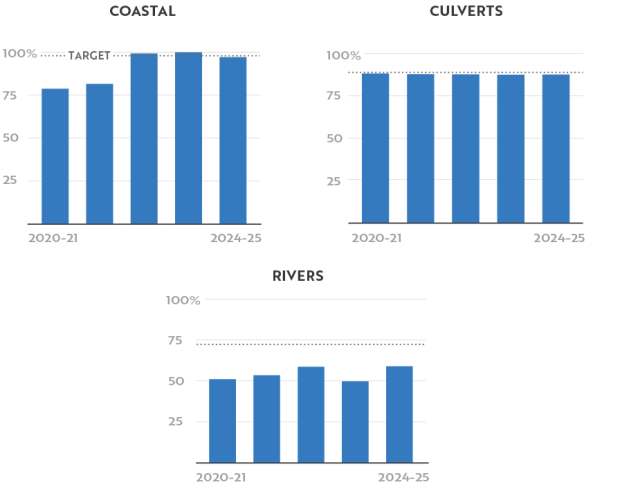
3.6 Assets that provide defence against flooding from rivers or coastal sources and culverts are subject to the minimum condition grade target. Across these assets the Department has been mostly unable to achieve the standard it has set. Whilst the condition of culvert and coastal defence assets have been close to the target in recent years, the condition of river flood defence assets has been significantly lower than the target (see Figure 6).
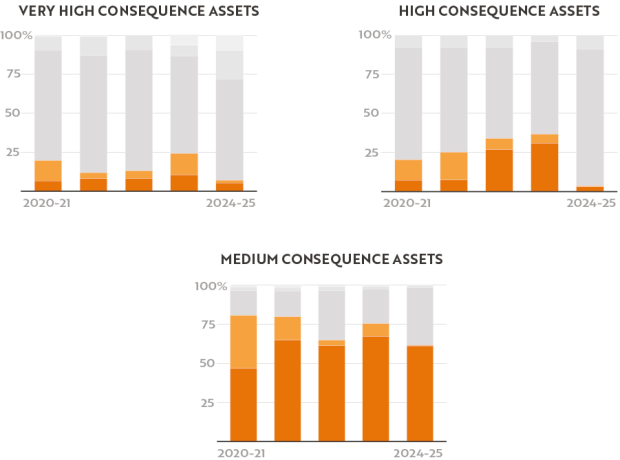
3.7 Whilst performance measures are based on these targets that cover all assets, it is important to note that there are significant differences in trends when assets are analysed by risk classification. Most above ground flood defence assets classified as Very High and High Consequence fall into the acceptable grading level. The majority of poorly graded above ground flood defence assets (Grades 4 and 5) are classified as Medium Consequence (see Figure 7). The Department told us that Medium Consequence above ground flood defences are the main asset type below the target and it has identified these assets for a focus for improvement.
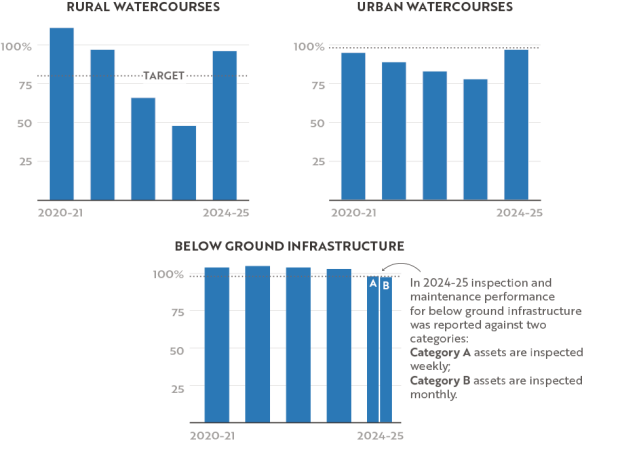
3.8 Watercourse assets and below ground infrastructure are subject to inspection and maintenance targets. Performance against these targets has been relatively stronger than in respect of the other assets. The most significant performance gap relates to the inspection of rural watercourses in 2022-23 and 2023-24 (see Figure 8) caused by lack of resources resulting in the prioritisation of urban watercourses.
3.9 DfI TRAM is currently required to complete one clean of all urban and rural road drainage gullies annually. However, this target has been subject to a Limited Service Agreement since June 2021. Within this reduced service context, the actual rates of inspection over the last two years have been 78 per cent in 2023-24 and 86 per cent in 2024-25. This reduction in inspection work is primarily a consequence of resourcing pressures which are considered to make the full programme impossible to deliver within DfI TRAM’s full programme of work.
3.10 In addition to these operational targets, a number of other inspection and maintenance targets apply to Rivers Directorate. In 2024-25 these included:
- Repairing infrastructure: Maintain drainage and flood defence systems by repairing at least 1 km of designated culverts and 4 km of rivers defences. This target was exceeded in 2024-25.
- Culvert inspections: Complete inspections of 100 per cent of culvert manhole chambers. This target was not met, with only 40 per cent completed in 2024-25.
- Quay maintenance: Complete maintenance of 100 per cent of Lough Neagh quays requested for repair. This target was not met, with progress standing at 11 per cent in 2024-25. The Department told us that this was a trial target for one year and it is planning to remove it going forward.
Progress against these targets is tracked as part of the ongoing monitoring of the FRMP.
The availability of funding dictates Rivers Directorate’s pace and scale of asset maintenance
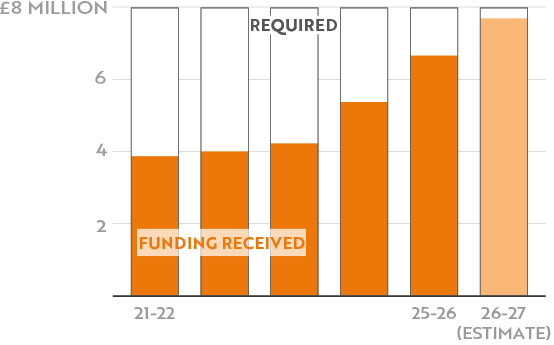
3.11 The Department has identified resourcing pressures as the key challenge affecting its ability to deliver on its asset inspection and maintenance targets. To maintain its asset base in line with the expectations of the FRMP, the Department estimates it requires £8 million per year. In practice, this level of funding has not been achieved, with only around £7 million per year having been available (see Figure 8). This shortfall means that planned maintenance is deferred, and the work that is caried out must be subject to a robust prioritisation process. The Department told us that constrained funding levels have required work to be prioritised based on areas of greatest flood risk. In recent years, increased budget (see Figure 9) allocations have enabled measurable improvements in both the inspection and maintenance of flood assets, as well as routine day-to-day watercourse maintenance.
3.12 This pressure is increased by the need to respond to severe weather events, which vary from year to year and cannot be planned for in advance. These events can require the Department to divert staff and resources from planned inspection and maintenance activity to emergency response, including responding to flooding from rivers, surface water and sewer systems, and dealing with the resulting damage. The Department told us that this can reduce the capacity available for planned work and, at times, lead to a more reactive approach to asset management. In the context of projected increases in the frequency of severe weather events, this pressure is likely to increase over time.
3.13 The Department seeks to manage this pressure through the use of robust prioritisation processes to ensure the flood asset maintenance that is completed is the most appropriate. A system of spreadsheets is used to evaluate benefits and costs of known maintenance needs, with a scoring system used to rank river and coastal assets for repair priority. These processes feed into year-on-year planning for the programme of inspection and subsequent maintenance works that may be required. Despite these processes, the Department recognises the impact that shortfalls in maintenance delivery, due to unforeseen responses to severe weather events, will have on service levels.
The Department has identified an opportunity to update its management information systems
3.14 The Department maintains a number of databases and information systems relating to flood defence assets to record information and manage asset conditions. A Departmental internal report in 2025 identified that there were a number of issues relating to the ongoing use of these systems:
- the dispersal of data across multiple systems resulted in duplication, and inefficiencies arising from the need to manage outdated information;
- limited ability to inform system users about updates and restrictions on some software upgrades;
- challenges with data storage and transfer that can affect the flow of information;
- reliance on a small number of individual system experts, posing a vulnerability should those staff be unavailable; and
- challenges in some information sharing between headquarters and field teams during emergency responses.
3.15 The nature of these findings is such that it appears reasonable to expect that there may be benefits associated with replacing the current patchwork of systems with a single dedicated information system. During our fieldwork, officials within Rivers Directorate agreed there would be benefits with such an enhancement. The Department told us that Rivers Directorate has a 10 year digital roadmap to complement and enhance a range of existing digital systems, to keep pace with modern technology and the expansion of new digital capabilities.
Recommendation 7
To enhance the Rivers Directorate’s data and ensure timely and accurate data is available for decision-making we recommend that the Department undertakes a detailed evaluation of the costs and benefits that would be incurred in upgrading current systems.
Resourcing pressures affect Rivers Directorate’s ability to deliver on its Capital Works Programme
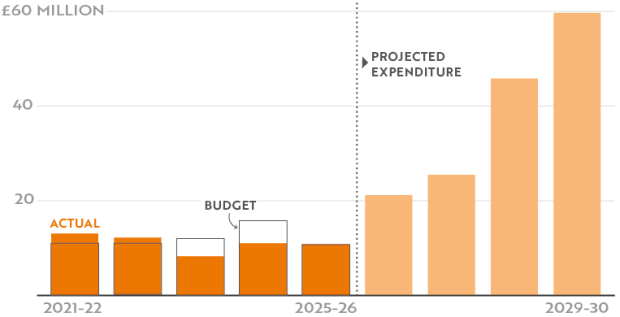
3.16 Flood defence infrastructure is operationally guided by the Fluvial Asset Management Plan 2020-2030, which projected a total capital spend of £167 million during this ten-year period. However, actual spend against budget for the first four years of the plan (see Figure 10) shows an underspend of nearly 11 per cent (£44 million actual against a budgeted £50 million). The Department’s current Capital Works Programme indicates that its plans for the next 10 year period, 2026-27 to 2035-36, are based on an intention to spend £248 million on flood alleviation.
3.17 As with numerous other long-term investment plans across the public sector, these plans are subject to a high degree of uncertainty imposed by the absence of multi-year budgetary settlements in Northern Ireland, meaning plans are developed without confirmation that anticipated funding will be available. This issue has been well rehearsed in a number of other NIAO reports within the Department and across other Executive departments.
3.18 Looking ahead, the Department’s future projections anticipate a substantial increase in investment needs over the next five years, reflecting the growing scale and complexity of flood risk management challenges. However, given the persistent gap between ambition and reality, and the volatility of both operational and capital funding, there is a significant risk that these ambitions will remain unrealised unless there is a fundamental shift in resource allocation, financial planning, and the broader approach to public sector budgeting. Given that the Department’s current estimates are that for every £1 spent on flood defences £11 worth of damage is prevented, it is important that delivery against these plans is maximised within available resource limits.
The approach to delivering new flood defence infrastructure is effectively coordinated but there have been issues in project delivery
3.19 All potential schemes on the Capital Works Programme are prioritised based on a number of criteria including any existing level of flood protection, benefit-to-cost ratio and estimated delivery cost. Higher ranked schemes are subject to a feasibility study to ensure that they are economically viable. All new schemes are designed in accordance with the Department’s ‘Technical Flood Risk Guidance in relation to Allowances for Climate Change’. This ensures that there is an appropriate consideration of Climate Change in the design of infrastructure, and future-proofs public assets for the management of flood risk.
3.20 Upon completion, all major projects are subject to a lessons learnt report that is completed by the Department and the contractor involved. Projects are also subject to a Post Project Evaluation (PPE), completed by the Department, using the expected benefits as outlined in the Business Case.
3.21 To assess how effectively the Department has been in its management of the major flood alleviation projects it has been able to deliver, we reviewed the PPEs completed in respect of a total of 21 flood alleviation projects, at a cost of nearly £58 million, completed between 2008 and 2023. During this review we found there had been an inconsistent approach to the completion of the PPE documents as they did not contain all the expected information. The PPEs also indicated that the planning and management of these projects is not consistently underpinned by a robust and accurate understanding of costs and timescales. As a result, the final outturn cost of projects is frequently significantly different to the final pre-project cost estimate, and final completion is significantly later than originally anticipated, including:
- only 20 per cent (4/21) reported as being delivered on time, with time variations ranging from 3 months early to 41 months late.
- only 14 per cent (3/21) of projects’ costs finished within 5 per cent of final pre-project cost estimate, with over and underspends ranging from 48 per cent under to 118 per cent over.
3.22 The Department told us that cost and time variations reflect factors commonly associated with flood alleviation schemes. These include inflationary pressures, uncertainty in ground conditions for below-ground works, evolving hydrological and hydraulic modelling, environmental and regulatory constraints, and dependencies on landowners and third parties. The Department also highlighted the impact of project pauses during the COVID-19 pandemic. While these factors increase delivery risk, in our view they also serve to underline the importance of robust estimating, challenge and assurance at the planning stage of projects.
3.23 In a context of scarce resources and the need to prioritise projects it is important that the Department is able to demonstrate it can accurately estimate the costs of potential projects. We consider that these variances in time and cost demonstrate that there is scope for the Department to improve how it estimates costs and timelines and, in turn, its cost–benefit analysis, to enhance the quality of information supporting effective decision-making.
Recommendation 8
The Department should review its processes for the preparation of cost and time estimates for capital works. This review should seek to ensure that sufficient challenge and oversight is provided at the planning stage in order that estimates are as accurate as possible. The Department should also ensure that all project documentation relating to new flood alleviation assets is consistently completed and reviewed.
New catchment-based management processes are being integrated into the overall approach to flood protection
3.24 The management of the LWWP (see Paragraphs 2.14 to 2.18) is structured around the division of the Belfast area into nine Catchment Delivery Plan (CDP) areas. The CDPs comprise river flood alleviation projects, upgrades to sewerage networks and Wastewater Treatment Works, as well as blue–green infrastructure initiatives and integrated schemes, where feasible. The modelling framework developed for the LWWP supports the CDPs and incorporates urban drainage, water quality and integrated drainage modelling. The Integrated Drainage Models (IDMs) are used to inform the CDPs and provide an evidence base to support investment decision-making. Model development has been facilitated by NI Water’s existing modelling framework and is overseen by a steering group that includes the Department and NI Water.
3.25 The Department has not yet adopted the IDMs due to uncertainties arising from some of the assumptions currently built into the models and the limited actual flow and rainfall data that has been incorporated. As a result, further testing is required to validate the IDMs’ outputs. The most recent update to the FRMP Progress Report does not indicate any current timeline for the completion of this work.
Recommendation 9
The Department should, in partnership with relevant stakeholders, support the funding and delivery of a prioritised programme of Integrated Drainage modelling to identify new opportunities to address drainage issues. The Department and NI Water should agree between them who is best placed to deliver this work so that it is aligned to the needs of all parties and efficiently delivered.
3.26 Work is also ongoing on other key enablers of a better catchment-based management approach. The Department has engaged with DAERA on the development of policy relating to agricultural land support measures that may contribute to flood risk management, and policies based on these engagements remain under development. More general policy and guidance on approaches to Natural Flood Management are also at developmental stage within the Department. Both areas of work are being led by the Department’s Sustainable Drainage Directorate, which was established in February 2025 to take forward the blue-green natural flood management and SuDS elements within the Living With Water in Belfast Plan. As a result, further river monitoring is being planned to increase confidence in the modelling outputs. However, this monitoring is subject to obtaining adequate funding. Typically, best practice stipulates that river monitoring equipment should remain in place for up to two years. The Department told us that responsibility for surface water falls to DfI TRAM, NI Water and in some cases Rivers Directorate, with all three organisations taking forward individual schemes for their respective elements. However, it is often difficult to determine responsibility for individual flooding occurrences, and this requires close cooperation between the three organisations.
Recommendation 10
The Department should establish a timescale for the development of Natural Flood Management guidance, and for the co-development of guidance on agricultural land support measures with DAERA.
Staffing and Capability: Ongoing Challenges in Building and Retaining Skills
3.27 Alongside the financial pressures highlighted above, the Department faces significant challenges in recruiting and retaining the specialist staff required for effective flood risk management. Technical and engineering skills are essential for flood risk management, resilience building, and modelling, yet the Department continues to struggle to attract and retain both industrial and specialist grades. As of the latest assessment, only 161 industrial staff are in post out of an expected complement of 222, and just 184 specialist professional and technical staff are in place from an expected 264.
3.28 The Department seeks to manage this pressure through the use of prioritisation processes to ensure the flood asset maintenance that is completed is the most appropriate. A system of spreadsheets is used to evaluate benefits and costs of known maintenance needs, with a scoring system used to rank river and coastal assets for repair priority. These processes feed into year-on-year planning for the programme of inspection and subsequent maintenance works that may be required. These staffing shortfalls directly impact core activities, including asset condition assessment, and timely planning advice. The Department acknowledges a lack of experience and skills at all levels, necessitating reliance on consultants and proactive measures such as supporting university courses, in-house training, apprenticeships, upskilling initiatives, temporary promotions, and specialist consultants. Despite these efforts, the inability to maintain a full staff complement continues to affect service delivery and the Department’s ability to meet its statutory obligations.
Recommendation 11
Where internal capacity is insufficient to deliver planned services, we recommend that the Department ensures that it fully exploits any arrangements it can establish with external partner organisations to enhance capacity, including the use of specialist agency staff.
Appendices
Appendix A: The Department’s legislation and Codes of Practice relating to flood risk (paragraph 1.4)
The Water Environment (Floods Directive) Regulations (Northern Ireland) 2009 established a six-year cycle of assessing, mapping, and managing flood risks to reduce impacts on human health, economic activity and the environment.
The Drainage Trusts (Dissolution) Order (Northern Ireland) 2006 dissolves the drainage trusts listed in the schedule and extinguishes all rights, duties, obligations, and liabilities arising under the trusts. The Order also provides for the Department to dispose of any property forming part of the trusts and to put the funds to the Consolidated Fund.
The Lough Neagh and Lower Bann Drainage and Navigation Act (Northern Ireland) 1955 sets the statutory duty to regulate the levels of the Lough within prescribed limits as far as weather permits.
The Lough Neagh Drainage (Amendment) Act 1970 extended the Department’s obligation to take account of other interests with regard to Lough level management.
The Water (Northern Ireland) Order 1999 requires the Department to have regard for environmental factors when carrying out functions under drainage legislation.
The Water Framework Directive introduced in 2000, and as amended, established a new integrated approach to the protection of the water environment. The Water Framework Directive provides a common framework for assessing water quality in designated ‘waterbodies’ and planning for and monitoring water quality improvement works based on a six-year rolling planning cycle. The Water Framework Directive is transposed in Northern Ireland through the Water Environment (Water Framework Directive) Regulations (Northern Ireland) 2017.
The Strategic Environmental Assessment (SEA) Directive (2001/42/EC) introduced in 2001 provides a framework for assessing the effects that certain overarching plans and programmes may have on the environment. It was ratified in Northern Ireland through The Environmental Assessment of Plans and Programmes Regulations (Northern Ireland) 2004 (S.R. 280/2004).
The Conservation (Natural Habitats, etc.) Regulations (Northern Ireland) 1995 (‘the Habitats Regulations’) transpose the requirements of the Habitats Directive (1992) and aspects of the Wild Birds Directive (1979, amended 2009) and provide the framework for the legal protection of species and habitats of European importance. The Habitats Directive therefore has a much narrower focus than the Strategic Environmental Assessment. A Habitats Regulations Assessment under that legislation is undertaken in order to determine whether a plan or programme will have an adverse effect on the integrity of sites designated at an international level (European Designated Site) for their nature conservation value.
There is broader legislative and policy context mentioned in Northern Ireland FRMP:
- Sustainable Water – A Long-Term Water Strategy for Northern Ireland (2015-2040)
- Living With Water Programme
- Reservoirs Act
- NI Climate Change Adaptation Programme 2
- Climate Change Risk Assessment 3
Appendix B: Monitoring of the Proposed Measures – Second Cycle FRMP 2021-27 (paragraph 1.17)
| Objectives | Objective Measures | Measures Type | Progress |
|---|---|---|---|
| Economic Activity | • Reduce economic damages to properties. • Reduce economic costs on business caused by the disruption to essential infrastructure and services. • Optimise economic return on Flood Risk Management investment. | Keep new development outside Flood Risk Areas | • Planning policies (PPS15, Council plan strategies and SPPS) in place. Work continues to maintain strong policy position. • Consultation responses are ongoing . • Rivers Directorate progressing work on the Climate Change Allowances for Climate Change in NI. |
| Ensure new development within Flood Risk Areas is suitably constructed | • This is on a case-by-case basis. • Well established practice developed by Rivers Directorate for flood risk management assessments when there is a proposed development application made. | ||
| Surface Water Management | • Water and Drainage Policy Division continues to progress ‘Water, Sustainable Drainage and Flood Management Bill’. • SuDS policy work now with newly formed Sustainable Drainage Directorate. This directorate launched a public consultation on nature-based SuDS in new housing developments. • Number of LWWP Blue Green Nature Based projects to be commenced (Carrs Glen Westland, SuDS at School Programme, Drumglass Park and Natural Flood Management: Belfast Castle). • TRAM (Transport and Road Asset Management) Major projects continue to utilise SuDS where appropriate. • Continuing to develop enhanced Drainage Area Plans for all APSFR. • Delay in taking forward a study to consider if predictive surface water flood models can be improved – awaiting AFBI/DAERA data. | ||
| Maintenance of Existing Drainage & Flood Defence Networks | • Rivers and DfI TRAM to continue to inspect/maintain designated watercourse grilles, road gullies as appropriate and as funding allows. • Introduction of a Limited Service in June 2021 due to resource pressures has resulted in a lower level of drainage maintenance. • Rivers Directorate continues to inspect all flood defence assets. • Continued prioritised programme of works for maintenance of all drainage assets and flood defence assets. • NI Water continues to implement a prioritised programme of works to maintain the public sewers and storm drainage systems. • Work is progressing for Rivers Directorate to take forward recommendations of the 2020-21 Asset Management Plan regarding the amount of funding required for future maintenance. • Flood Investment and Planning Group was disbanded in 2021 – normal business arrangements include Inter Agency Flood Liaison Group’s current equivalent ‘Flooding & Severe Weather Working Group’. | ||
| Human Health | • Reduce the risk to life, health and wellbeing. • Raise awareness of the consequences of flood risk. • Reduce risk to health and wellbeing. • Reduce the impact on people caused by the disruption to essential infrastructure and services. • Improve recreation and public amenities. | New Flood Alleviation & Drainage Schemes | • Feasibility studies continue. • Rivers Directorate and NI Water continuing to prioritise programme of works for this. • NI Water continuing to implement a prioritised programme of works of integrated surface water drainage schemes and to separate surface water systems from combined sewer systems. LWW involvement now at a pace and scale achievable within available budgets. |
| Catchment-Based Management | • Collaborative working for an integrated approach to drainage and wastewater management continues for Rivers Directorate and NI Water. LWW involvement now at a pace and scale achievable within available budgets. • Collaborative working for flood risk, climate change adaptation, water quality and biodiversity continues for Rivers Directorate and TRAM. LWW involvement now at a pace and scale achievable within available budgets. • Engaging with DAERA on future measures – transferred from Water and Drainage Policy Division to Sustainable Drainage Directorate – plan to seek Minister’s view on the initial work undertaken and future proposals. • Develop policy/guidance on approaches to Natural Flood Management – same as above transferred and plan to seek Minister’s view. • Water and Drainage Policy Division – Draft report completed for a study to improve understanding of the potential for groundwater flooding. | ||
| Flood Emergency Response | • Both test and live emergency responses have occurred with multi-agencies. • Continue to work with co-responders with a further exercise planned for June 2026. | ||
| Environmental & Cultural Heritage | • Consider the impact of Climate Change. • Under the Water Framework Directive, support the achievement of good ecological potential/status for water bodies. • Reduce the risk of pollution. • Avoid or mitigate impact on priority species and habitats. • Avoid or mitigate impact on designated environmental areas, including those of cultural heritage importance. | Flood Warning & Informing suitable for NI | • Work is continuing with the MET Office along with other agencies. • Informing in relation to flood risk through community engagement is continuing, as well as public dissemination of water level information. • Rivers Directorate is taking forward Flood Forecasting development. |
| Community Engagement | • Continuing to work with local governments and other agencies. • Continuing to work with partners to further develop communication with communities at risk of flooding. | ||
| Communication of Flood Risk | • Continuing to update flood maps routinely. • Current work to review the NI Direct website. • Development of Flooding Incident Line completed. • Continue to consult with stakeholders to make them aware of their roles and responsibilities – will be progressed in consultation requirements for 3rd cycle. • Media messages and comms for significant flooding events continues. | ||
| Individual Property Protection | • Homeowner Flood Protection Grant Scheme continues. | ||
| Flood Recovery, Welfare and Insurance Issues | • Reviews continue for flood investigations to help improve knowledge and action on future flood events. • NI Water continues to work with councils and local communities to aide recovery after a flood event. The Department has provided input to a ‘Recovery’ plan and has ongoing engagement with multi-agency partners including Red Cross and the insurance industry. |
Appendix C: Combined flood risk management spend across the Department (Figure 2 and paragraph 1.10)
Flood Risk Management spend across the Department for Infrastructure
| Area | 2015-16 | 2016-17 | 2017-18 | 2018-19 | 2019-20 | 2020-21 | 2021-22 | 2022-23 | 2023-24 | 2024-25 |
|---|---|---|---|---|---|---|---|---|---|---|
| £m | £m | £m | £m | £m | £m | £m | £m | £m | £m | |
| DfI Rivers | 22.3 | 22.8 | 23.3 | 22.7 | 22.6 | 22.7 | 35.4 | 40.0 | 37.6 | 42.9 |
| DfI TRAM | 12.6 | 15.7 | 16.1 | 15.3 | 15.5 | 15.5 | 16.6 | 19.8 | 20.6 | 21.0 |
| DfI TRAM Drainage Charge | 20.0 | 20.6 | 21.0 | 21.9 | 22.6 | 22.8 | 23.3 | 24.2 | 29.1 | 31.1 |
| DfI Water & Drainage Policy Division | - | - | 0.04 | 0.1 | 0.01 | 0.1 | 0.003 | - | 0.06 | 0.05 |
| NI Water | 1.9 | 1.5 | 4.0 | 5.4 | 3.1 | 4.6 | 8.2 | 6.5 | 4.5 | 1.4 |
| DfI Planning Directorate | - | - | - | - | - | - | - | - | - | - |
Note: Funding responsibility for the Roads Drainage Charge transferred from DfI TRAM to the DfI Water and Drainage Policy Division.
Source: NIAO based on Departmental Data.