
List of Abbreviations
CoPE Centre of Procurement Expertise
CPD Construction and Procurement Delivery
DevOps Development and Operations
DfI Department for Infrastructure
DoF Department of Finance
DVA Driver and Vehicle Agency
HR Human Resources
ICT Information and Communications Technology
ISO International Organisation for Standardisation
IST Integrated Supply Team
IT Information Technology
ITL Integrated Test Lane
MAT Most Advantageous Tender
NICS Northern Ireland Civil Service
NoT Notice of Termination
PGN Procurement Guidance Notes
PME Preliminary Market Engagement
SSD Supplies and Services Division
TEC Temporary Exemption Certificate
Northern Ireland Audit Office
Glossary
Abnormally low tender
defined within Construction and Procurement Delivery (CPD) procurement guidance, where tenders appear abnormally low in price relative to the requirement
Integrated Test Lane
a testing system by which vehicles can move between lanes during testing rather than being restricted to one lane
Most advantageous tender
under the current Procurement Act 2023 framework, the tender identified as best satisfying the authority’s award criteria. Earlier procurements, including the 2019 competition, were conducted under the public procurement framework in force at that time
Notice of Termination
a legal notice served on a party to a contract, indicating the intention to exit the contract
Notice to Remedy
a legal notice served on a party to a contract, seeking the resolution of an issue arising from performance of the contract
Off-the-shelf system
pre-built and commercially available software which requires little customisation system
Preliminary market engagement
the process of fact-finding from potential suppliers before starting a formal procurement exercise
Temporary Exemption Certificate
a certificate which automatically extends a private car’s vehicle test certificate for a period of 12 months
Trading Fund
the status of Driver and Vehicle Agency (DVA) through its recovery of most of its costs through statutory fees for vehicle and driver testing rather than through direct funding allocations
Key Facts
Executive Summary
Background
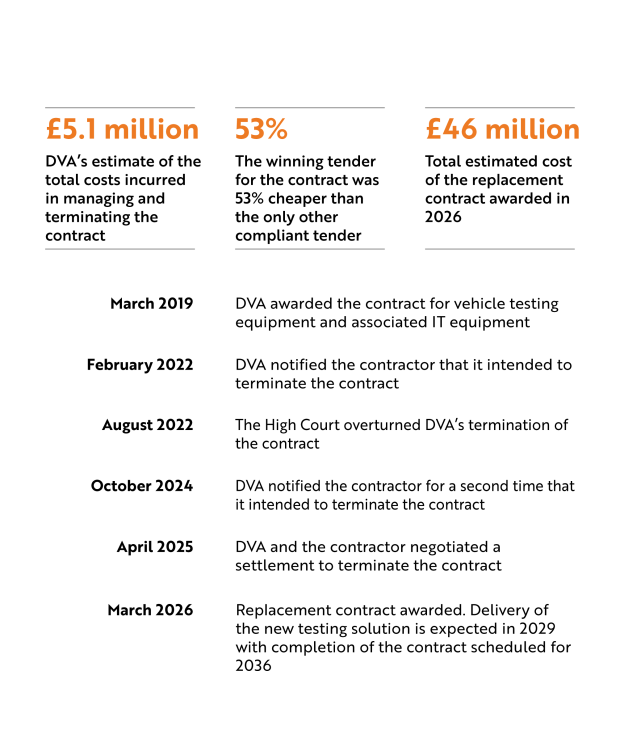
1. In March 2019 the Driver and Vehicle Agency (DVA) awarded a contract for the supply, installation, commissioning and maintenance of new vehicle testing equipment and associated IT systems. The contract formed a key part of DVA’s plans to modernise vehicle testing operations, increase testing capacity and support wider service improvements. It did not achieve those aims. Instead, following a prolonged period of delivery issues, contractual disputes and legal challenges, the contract was terminated in 2025 without delivering the intended operational benefits.
2. DVA began to develop concerns about the contractor’s performance early in the contract’s implementation phase, and these persisted throughout the project. As a result DVA issued the contractor with two written warnings in 2021 and, after concluding that successful delivery was not likely, sought to terminate the contract for contractor default in February 2022.
3. The contractor successfully challenged this decision in the High Court, requiring DVA to reengage with the contract and work towards a successful outcome. Over the next two years significant difficulties and disagreements persisted and by October 2024 DVA had again concluded there was no credible prospect of successful delivery. Following the issue of a second termination notice the contractor again initiated a legal challenge to overturn the decision. In advance of this challenge being heard in court, the parties reached a negotiated settlement in April 2025 which brought the contract to an end without admission of fault by either party.
The failure of this contract was costly and the intended benefits were not delivered
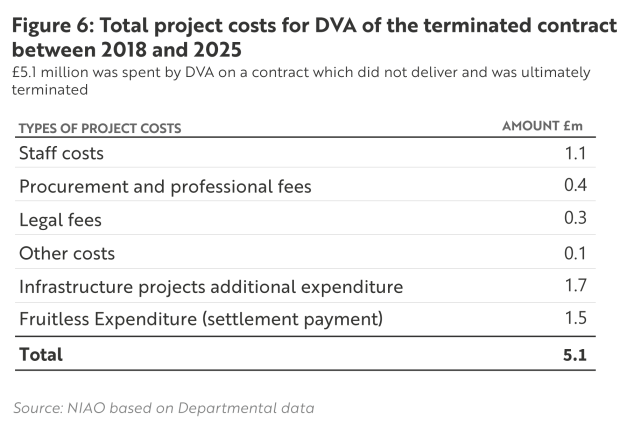
4. The failure of the contract has had financial and service delivery consequences. In total, DVA estimated that £5.1 million had been spent on the procurement, management and attempted delivery of the contract. These costs consisted of a payment of £1.5 million made as part of the settlement agreement in respect of costs that had been incurred up to that point by the contractor, and a further £3.6 million of staff and other costs incurred by DVA through the life of the contract.
5. The failure also delayed planned service improvements. In particular, the contract was intended to deliver capacity for an increased 100,000 vehicle tests following installation of equipment at DVA’s new Hydebank facility from December 2023. The failure to deliver this capacity has therefore prolonged DVA’s reliance on temporary measures, including the use of overtime payments and Temporary Exemption Certificates (TECs), to help manage vehicle testing demand.
6. The financial consequences extend beyond the £5.1 million already incurred. DVA awarded a new contract in March 2026 with a total value of approximately £46 million. Direct comparison with the £10.8 million contract awarded in 2019 is limited because the new contract reflects changes in scope, delivery period, enabling works, maintenance requirements, inflation and revised assumptions about the resources required for successful delivery. The new contract is also materially more expensive than the £23 million second-placed compliant tender in the original competition.
An extensive procurement process did not enable DVA to fully evaluate the challenges it would face working with its appointed contractor
7. A successful procurement process should equip a contracting authority with a clear understanding of the capacity, capability and delivery approach of potential suppliers. This is particularly important where successful delivery depends on the supplier’s ability to translate outcomes-based project specifications into practical operational solutions.
8. For this contract, DVA undertook a substantial procurement exercise involving pre-market engagement, tender evaluation, and pre-contract award clarification and verification activities. During the process DVA received five tender submissions, two of which were deemed to meet the required quality standard. Whilst a number of delivery concerns were identified during the assessment of the successful tender, these were not considered sufficient to prevent it passing the quality threshold. The successful bid’s substantial pricing advantage over the competing compliant tender was then decisive in determining which bid should be accepted.
9. However, the difficulties that subsequently emerged indicate that the process which was used did not provide sufficient assurance that the eventual successful bidder could deliver the proposed solution in practice. In particular, it did not fully expose differences in expectations between the parties, the practical challenges associated with delivery, or the extent to which DVA and the successful bidder would not be able to work together effectively throughout the life of the contract.
This procurement exercise reiterates the challenge public sector bodies face in procuring IT systems
10. The IT software and infrastructure delivered within this contract were central to achieving the intended benefits of the project. As highlighted in our previous work on Major IT Projects in Northern Ireland, public sector bodies regularly encounter significant challenges in procuring and implementing technology-enabled change. In this case, the proposed IT solution received limited scrutiny during procurement and subsequently emerged as a major source of disagreement between DVA and the contractor. The off-the-shelf system offered within the successful tender did not deliver a solution that DVA accepted as meeting its requirements in the form proposed in the tender submission.
11. This highlights a broader challenge for contracting authorities. Procurement approaches based primarily on the evaluation of written submissions may not always provide sufficient opportunity to test delivery assumptions, technical solutions or the practical implications of supplier proposals. Public bodies should therefore consider whether procurement methodologies that permit greater engagement and exploration of proposed solutions are more appropriate where contracts involve significant IT-enabled transformation, uncertainty or reliance on an effective long-term working relationship.
Contractual weaknesses undermined DVA’s ability to exit the contract after it had determined it would not be successful
12. As noted above, by late 2021 DVA had concluded successful delivery of the contract was not a realistic outcome. Its preferred approach was to pursue termination for contractor default. However, legal advice received by DVA at this time had identified weaknesses in the contractual framework, including the absence of clear dates for key deliverables.
13. When its decision to terminate the contract was challenged in the High Court by the contractor, these weaknesses were central to the Court’s decision to overturn the termination. The Court found that the project milestone dates relied upon by DVA were not contractually binding and that there was insufficient evidence to support DVA’s initial attempt to terminate. As a result, DVA was required to continue with a contract which it had lost confidence in.
14. Within the contract, there was a clause (Clause 60) that allowed either party to end the agreement on three months’ notice without establishing contractual breach. In principle, this provided DVA with an alternative to the Notice of Termination (NoT) route that it sought to use to exit the contract. DVA did not pursue this option, instead seeking to establish contractor default. That decision was based upon a concern that exercising this clause would not prevent the contractor from seeking to win any replacement contract that was advertised, as well as an understanding it would impose a requirement to pay the contractor for costs it had incurred to date. However, it also meant DVA continued to rely on a termination route that legal advice had indicated was vulnerable to challenge.
15. It is not possible to conclude definitively that earlier use of Clause 60 would have resulted in a quicker, less costly or less disruptive exit from the contract. The decision involved legal and commercial judgements, including the potential implications for any future procurement and DVA’s ability to protect its position. However, the case highlights the importance of contracting authorities actively considering and documenting all available exit options once confidence in successful delivery has been lost. This includes assessing whether a no-fault termination provision may offer a more practical route to exit than pursuing termination for default where the contractual basis for default is uncertain. Fundamentally, it highlights the need for a thorough and robust contract with key basic elements such as deliverables and timetables to be included from the outset.
Learning has been identified by DVA and CPD but not yet disseminated across the wider public sector
16. Following the termination of the contract, both DVA and Construction and Procurement Delivery (CPD) carried out lessons learned exercises. Although approached from different perspectives, both reviews reached broadly similar conclusions. They identified weaknesses in contract specification, software development assumptions, governance arrangements and the use of contractual controls.
17. It is evident that the lessons identified have been acted upon locally and the two organisations have sought to address the issues identified within the design of the replacement contract. Changes were made to the contract structure, specification, assurance arrangements and milestone controls to address weaknesses identified during the original contract. This demonstrates that the organisations directly involved have reflected on the causes of failure and have taken steps to strengthen future procurements.
18. The greater challenge is ensuring that this learning is shared beyond the organisations involved. At the time of our audit there are arrangements within the Heads of Procurement Group to facilitate the dissemination of such learning, but these are not yet fully operational. Given the significance of the issues identified, the cost to the public purse, and the continuing evolution of procurement legislation and guidance, it is important that lessons from this contract inform procurement practice more broadly.
Conclusion
19. This contract demonstrates that the application of formal procurement processes does not, by itself, guarantee a successful procurement outcome. DVA undertook extensive procurement, evaluation and verification activity before awarding the contract. However, these processes did not provide decision-makers with sufficient assurance regarding the credibility of the proposed solution, the practical challenges of delivery or the extent to which DVA and the successful contractor would be able to work effectively together. Once significant problems emerged, weaknesses in the contractual framework also limited DVA’s ability to bring the arrangement to a timely conclusion.
20. The lessons from this contract have wider relevance for public sector procurements involving outcome-based requirements, technology-enabled operational change or significant supplier discretion over how requirements will be delivered. In these circumstances, procurement and contract management arrangements should provide decision-makers with sufficient opportunity to assess not only compliance with tender requirements, but also the maturity, realism and deliverability of proposed solutions and potential suppliers.
Recommendations
Recommendation 1
Procurement processes should provide contracting authorities with appropriate opportunities to assess supplier deliverability alongside compliance with tender requirements.
Construction and Procurement Delivery’s Policy and Performance Division, working with the Heads of Procurement Group, should review existing guidance and identify circumstances where contracting authorities would benefit from additional guidance that would support more consistent approaches to due diligence, engagement or validation activity to better understand delivery risks before contract award. Such guidance should be issued by CPD as soon as possible, with associated training provided as necessary.
Recommendation 2
Significant differences in tender pricing should be considered as indicators of delivery risk as well as potential value for money opportunities.
Construction and Procurement Delivery’s Policy and Performance Division, working with the Heads of Procurement Group, should review and update existing guidance to incorporate lessons learned from the DVA contract to provide contracting authorities with more support in assessing the credibility and delivery risks of bids where tender pricing differs significantly from competing bids or cost estimates.
Recommendation 3
Procurement approaches should reflect the specific risks associated with technology-enabled transformation.
Construction and Procurement Delivery’s Policy and Performance Division, working with the Heads of Procurement Group, should review existing guidance and identify and update where additional guidance is required for technology-enabled transformation projects. This should support contracting authorities in defining software development and integration requirements, assessing the maturity and deliverability of proposed technical solutions, and determining whether additional technical engagement, assurance, demonstration or testing is required before contract award.
Recommendation 4
Lessons arising from significant procurement failures should be systematically disseminated across the public sector.
Construction and Procurement Delivery’s Policy and Performance Division, working with the Heads of Procurement Group, should ensure that existing arrangements for capturing and sharing procurement lessons are fully implemented and actively used. This should include implementing a process across the public sector whereby the systematic dissemination of learning from procurements involving significant delivery failure, legal challenge or material contractual weaknesses is shared on a timely basis.
Part One: Introduction
Background
1.1 The Driver and Vehicle Agency (DVA) is an executive agency of the Department for Infrastructure (the Department) responsible for vehicle and driver testing and licensing in Northern Ireland. Through these functions, it plays a central role in supporting road safety and regulating the transport sector.
1.2 Unlike Great Britain, where vehicle testing is undertaken by private garages, in Northern Ireland all vehicles requiring testing must be tested at one of 15 DVA vehicle testing centres. DVA typically inspects over one million vehicles each year across this network.
1.3 DVA’s vehicle testing services have been subject to sustained pressure in recent years due to a combination of operational disruption and rising demand. This increased demand has been a result of increasing numbers of registered vehicles in Northern Ireland, as well as the age profile of these vehicles becoming older.
1.4 In January 2020, vehicle testing was suspended following safety concerns relating to lifting equipment (see Figure 1). This disruption was compounded by the onset of the COVID-19 pandemic and the associated public health measures which further constrained service delivery. As services resumed, pent-up demand and continued growth in the number of vehicles requiring testing placed significant pressure on testing capacity.
Figure 1: Lifts cracking issue
In late 2019 significant safety concerns emerged in relation to the scissor lifts used in MOT centres, which are a critical component in enabling the inspection of vehicles.
The C&AG reported that, despite an established maintenance and inspection regime, cracks indicative of structural fatigue had been detected in 51 of the 55 lifts. Independent engineering advice concluded that the lifts had exceeded their design load cycles and recommended replacement rather than repair. The report highlighted that DVA had relied on contractor maintenance arrangements and prior condition surveys and had not established a defined lifecycle or replacement plan for the lifts. As a result, the scale of the issue led to the suspension of all MOT testing services in January 2020, with significant operational disruption and financial impact.
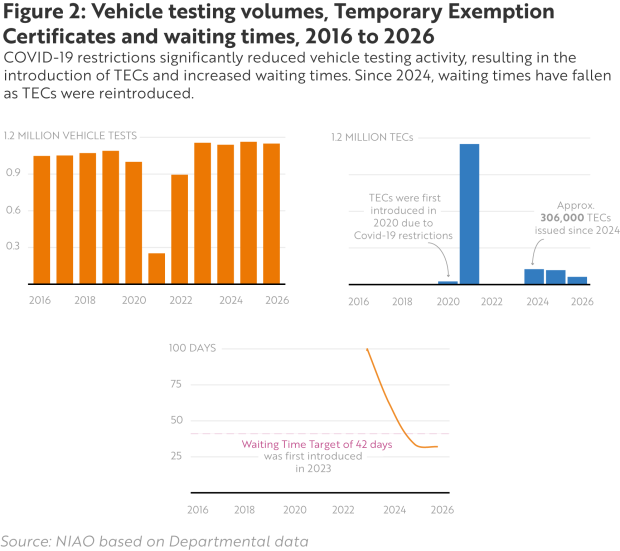
1.5These pressures had a significant impact on service performance. Waiting times for vehicle tests increased substantially and peaked at more than 100 days in 2023. DVA subsequently introduced a formal target of 42 days from 2023-24. Reported performance improved from an average waiting time of 59 days in 2023-24 to 33 days in 2024-25. This improvement was supported by a range of measures, including the reintroduction of Temporary Exemption Certificates (TECs), which reduced immediate demand for testing (see Figure 2). The role and impact of TECs are discussed further in Part Four.
In 2014 DVA established a Transformation Programme intended to support the modernisation of its infrastructure network
1.6 In 2014, DVA established a Transformation Programme aimed at improving its ICT, infrastructure and people capabilities. A key element of the programme was the modernisation of the vehicle testing estate through the expansion of testing capacity, replacement of ageing equipment and development of a more efficient and sustainable network of test centres.
1.7 The need for modernisation was driven by several factors. In addition to the increasing demand noted above, these included changes in regulatory requirements, particularly in relation to emissions testing, and the need to improve the condition, efficiency and functionality of the existing test centre network.
1.8 Prior to the collapse of the Northern Ireland Executive in January 2017, the then Minister approved proposals for a new network of vehicle testing centres. However, agreement had not been reached on the funding arrangements required to deliver these.
1.9 Despite this uncertainty, DVA continued planning for the replacement of vehicle testing equipment. Two potential deployment models were developed: one aligned to a future network of new test centres and another based on continued operation of the existing estate. An outline business case covering the supply, installation and maintenance of vehicle testing equipment was completed in late 2017 and approved by the Department of Finance (DoF) in June 2018.
1.10 The objective of the procurement was to secure vehicle testing equipment and associated lane management software capable of being deployed across either option. The specification was drafted at a relatively high level, providing flexibility in how suppliers designed and priced their proposed solutions. Throughout the procurement process, DVA was supported by CPD’s Supplies and Services Division (SSD), acting as a Centre of Procurement Expertise (CoPE).
The contract awarded in 2019 was terminated in 2025 without delivering the intended outcomes
1.11 The business case for the contract estimated the total cost for the project to be £18.1 million. This would create new capacity for around 200,000 additional vehicle tests each year once the newly built Hydebank and Mallusk sites were operational. DVA received five tenders, two of which were deemed to have met the quality threshold. There was a significant cost differential between the two compliant tenders, with the cheaper option (£10.8 million) being 53 per cent lower than the competing tender price (£23 million), and 40 per cent lower than the business case estimate. This cost difference was critical to the eventual award decision, with the lower cost tender winning the contract.
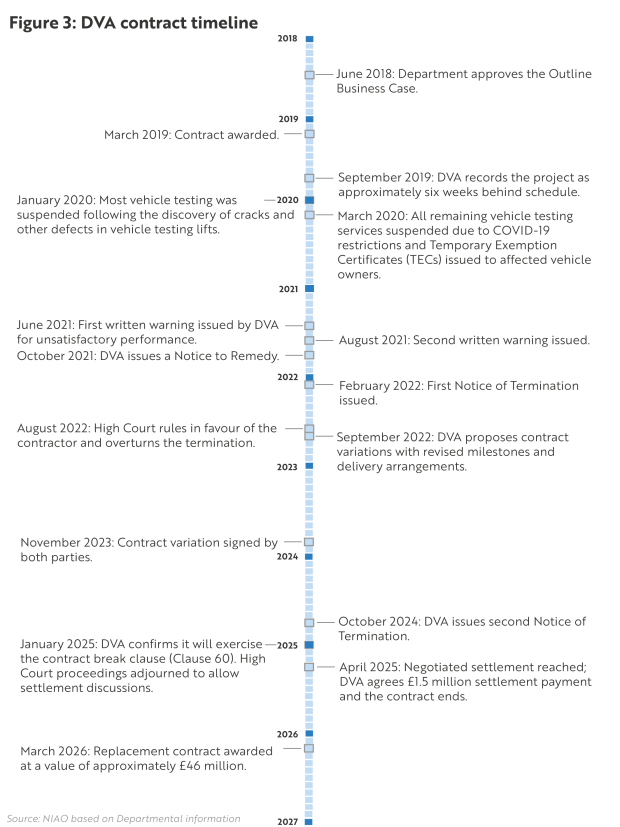
1.12 Following contract award, the project was beset by what both DVA and CPD considered to be repeated, significant failings by the contractor. Between June 2021 and October 2024, DVA issued two written warnings to its contractor and issued two Notices of Termination (NoT). The first NoT was overturned in the High Court in August 2022, following a legal challenge by the contractor. A High Court hearing of the contractor’s challenge to the second NoT was scheduled for January 2025. On the eve of the hearing, the contractor’s legal team contacted DVA proposing a negotiation process to attempt to reach an out-of-court settlement. As a result, the Court agreed to the deferral of the hearing, and in April 2025 DVA and the contractor agreed a final settlement.
The replacement contract reflects changes in scope, capacity and delivery timelines
1.13 Following termination, DVA initiated a replacement procurement exercise in April 2025. An updated full business case was approved in October 2025, reflecting both the need to secure a vehicle testing solution and lessons learned from the earlier procurement. The business case provides for the supply, installation, calibration and commissioning of vehicle testing equipment, together with associated IT systems, enabling works and ongoing maintenance and support arrangements. Delivery is intended to be phased, beginning with a pilot test lane and rollout at Hydebank, followed by implementation at Mallusk and the remaining testing centre network.
1.14 The replacement contract was awarded in March 2026 to the only tender offer received with a total value of £46 million and delivery of the new testing solution expected by mid-2029, with maintenance continuing until 2035-36. This represents a significant increase in both cost and delivery timescales compared with the original contract. The increase is a result of a combination of factors, including inflation, changes in programme scope, and a revised assessment of the resources and time required to deliver the programme successfully.
Scope and structure
1.15 This report examines why value for money was not achieved from the 2019 vehicle testing equipment contract. It considers whether the design, procurement and management of the contract provided DVA with sufficient assurance over delivery, and how DVA and CPD responded once serious delivery concerns emerged.
1.16 The report also considers the consequences of the contract’s failure, including costs incurred, delays to planned service improvements, the need for a replacement procurement and the extent to which lessons have been identified, applied and shared. While the procurement environment has evolved since the original competition, including through the introduction of the Procurement Act 2023, the issues considered in this report remain relevant to wider public sector procurement practice.
1.17 The report is structured in the following way:
- Part Two examines whether the contract was designed and awarded in a way that gave DVA sufficient assurance that the successful bidder could deliver the required solution. It considers the procurement approach, assessment of bidder capability, scrutiny of the proposed IT solution, and the significance of differences in tender pricing.
- Part Three examines how DVA managed the contract once delivery concerns emerged. It considers the contractual framework, DVA’s use of performance management and termination provisions, the legal challenges that followed, and whether DVA’s actions were reasonable in the circumstances.
- Part Four examines the financial and service delivery consequences of the contract’s failure. It considers the costs incurred, the impact on vehicle testing capacity, the higher cost of the replacement contract, and whether DVA and CPD have identified, applied and shared lessons from the procurement.
Part Two: Contract design and award
2.1 This Part of the report examines the design and award of the 2019 contract. It considers the governance and expertise available to DVA and CPD, the nature of the requirement being procured, the extent of pre-award scrutiny, and how the evaluation process treated delivery risk and price.
DVA had governance arrangements in place and access to relevant expertise to support procurement
2.2 Successful delivery of a procurement exercise of this nature requires access to both technical and commercial expertise. In this case, the project required specialist knowledge of vehicle testing equipment and supporting IT infrastructure, alongside experience of managing a procurement process of significant scale and complexity.
2.3 DVA established a project team that included a Project Manager, technical specialists and an IT representative from the Department’s Digital Services Branch. DVA also engaged CPD’s Supplies and Services Division (SSD) to provide procurement support throughout the competition. An equipment implementation Project Board met regularly from contract award in 2019 until September 2024. In addition, there were monthly project management meetings with the contractor from early 2020 until November 2021, a month after DVA issued the Notice to Remedy. Formal service review meetings between DVA and the contractor began in June 2023 and there were a series of progress meetings between the Project Team and the contractor from April to November 2023.
2.4 DVA was subject to significant operational pressures during the procurement and early delivery period. These included the disruption caused by safety concerns with vehicle testing lifts and, from 2020, the wider impact of the COVID-19 pandemic. These issues created potential risks to DVA’s capacity to manage the project.
2.5 DVA and CPD told us these pressures did not adversely affect their management of the project. Our review did not identify evidence that either organisation failed to maintain active oversight of the procurement process as a result of these pressures.
The procurement used a standard supplies and services contract template
2.6 Although the contract involved the supply, installation, commissioning and maintenance of vehicle testing equipment, the intended benefits depended on successful delivery of IT hardware and software. In particular, the contractor’s proposed enhanced Integrated Test Lane (ITL) system was intended to support more efficient and adaptable testing, by allowing vehicles to move between lanes during testing, rather than being restricted to one lane, whilst also improving the quality of management information available.
2.7 Given the importance of IT to the project’s overall success we queried whether DVA and CPD had considered the use of a contract tailored to IT projects for this procurement. This was judged to be unnecessary, and both agreed that a standard goods and services contract template was appropriate for the entire procurement. This reflected their assessment that neither the physical infrastructure nor the ITL system presented a high level of technical complexity, and the relatively low proportion of the total project cost relating to the IT aspects. The 2018 business case had estimated IT hardware costs as around 2 per cent of the total project costs, and they accounted for 9 per cent of the total cost of the eventual winning tender.
Market engagement and verification identified some risks to deliverability
2.8 Preliminary Market Engagement (PME) is the process of fact-finding from potential suppliers before starting a formal procurement exercise. It helps the contracting authority gain a better understanding of the market, available solutions, and supplier capabilities. The information can play an important role in shaping the business case, procurement strategy, specification requirements and tender documentation, ideally leading to better decision making.
2.9 DVA undertook PME in early 2018. Seven interested parties submitted questionnaires and were invited to attend engagement meetings. The process included a test centre tour, presentations by DVA and suppliers, and discussions with DVA and CPD staff. These discussions covered areas including finance, ICT, data and mobile technology, underbody inspection, equipment, brake testing and pits for heavy vehicle lanes.
2.10 The subsequent procurement exercise followed established procedures. Our review of the bid documentation confirmed that whilst the winning tender was assessed as technically competent, evaluators identified what we consider to be significant limitations in a number of areas including equipment, IT and maintenance proposals. Whilst these areas received relatively lower scores in the evaluation, their impact on the final quality score was insufficient to prevent the tender from meeting the required standard.
2.11 DVA also engaged directly with the successful tenderer in the period of time between the tender evaluation and the signing of the final contract. This included a site verification visit to Spain in January 2019 by members of the project team. The purpose of the visit was to verify that the equipment and ITL functionality being offered met the tender requirements.
2.12 DVA’s own internal report from the Spain visit recorded that it was not possible to demonstrate the specific ITL system that would be deployed in Northern Ireland. Instead, the contractor demonstrated alternative ITL implementations in Fiji and Utah. This was significant because a key element of the winning tender was the proposition of an “off-the-shelf” software and hardware platform which would require only limited customisation to meet DVA’s requirements.
2.13 DVA and CPD informed us that a specific validation of the “off-the-shelf” solution was not within the scope of the Spain verification visit as it was not a requirement of their tender specification. DVA and CPD explained the visit was primarily to verify that the items of equipment that had been proposed within the tender were appropriate.
Significant tender price differences became decisive once quality thresholds had been met
2.14 The overall approach used by DVA was that the award decision would be based on a weighted score, weighted on a 60:40 ratio between quality and cost. All tenders would be subject to an initial quality assessment. Only those that passed this assessment would then proceed to cost evaluation.
2.15 Whilst DVA received five tender offers, only two were assessed to meet the required quality threshold and allowed to progress to a final cost-based selection. Once that threshold had been met, the successful bidder’s significantly lower price gave it a decisive advantage over the other compliant tender. Whilst the higher-priced tender scored better on quality, the scoring outcomes in this category were narrower than within the cost category. The successful tender was valued at £10.8 million compared to £23 million for the alternative bid.
2.16 Based on the scores awarded, the weighting would have needed to shift to approximately 80 per cent quality and 20 per cent cost for the result to change. This illustrates the extent to which the price difference limited the real-world impact of the higher quality score awarded to the unsuccessful tender.
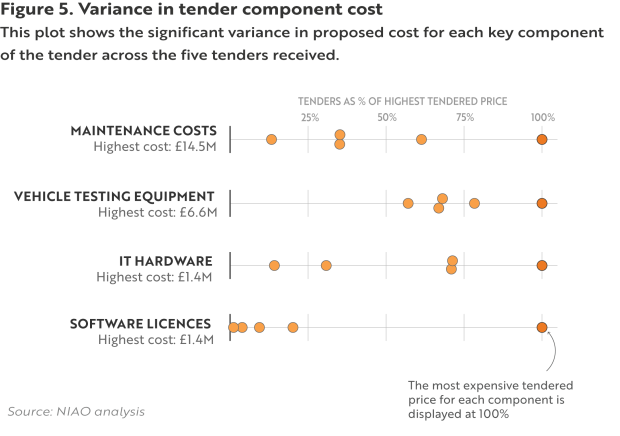
2.17 The main difference between the cost proposed in the two compliant tenders related to the costs assigned to equipment maintenance. The competing bid’s maintenance provision was almost three times that of the winning bid. Maintenance accounted for 63 per cent of total costs in the higher-priced bid, compared with 47 per cent in the winning bid. The winning tender had priced maintenance for eight years at £5.1 million (£638,000 per year), the second-placed bid estimated £14.5 million (£1.45 million per year). This indicated a materially different pricing approach to an important element of the contract and reinforced the need for assurance over the assumptions underpinning the successful tender.
2.18 In our view, the combination of this cost differential and the significant concerns noted in the tender evaluation document relating to this area suggest there was a significant risk at this time that the required level of service would not be deliverable in the event that the contract progressed to this stage. Ultimately, any such risk did not have time to materialise or be resolved as a result of the early termination of the contract.
The winning tender was not considered to be abnormally low
2.19 A lower price tender can represent a value-for-money opportunity. However, where a bid is materially lower than both the contracting authority’s own estimate and another compliant tender, it can also indicate different assumptions about scope, resources, risk, maintenance requirements or the practical complexity of delivery. In those circumstances, the key assurance question is whether the contracting authority has sufficient evidence that the proposed solution is realistic, sustainable and deliverable at the price offered.
2.20 We asked DVA and CPD whether the successful tender should have been treated as abnormally low (see Figure 4). Such an assessment would have required formal consideration of whether the tender price was realistic and whether the proposed solution could be delivered at that cost. DVA and CPD told us that the tender was not considered an outlier when assessed against all five tenders received, and the evaluation panel and CPD therefore concluded that the bid was not abnormally low.
Figure 4: Abnormally low tenders
Abnormally low tenders are addressed within CPD procurement guidance as part of ensuring value for money and managing delivery risk. Procurement guidance and legislation require contracting authorities to identify and investigate tenders that appear abnormally low in price relative to the requirement, as these may indicate an increased risk of non-delivery or poor performance.
Regulation 69 of Public Contracts Regulations 2015 was in place in 2018 and refers to abnormally low tenders. This required contracting authorities to investigate any unusually low bid by seeking and assessing a formal explanation of the pricing, including factors such as delivery approach, technical solutions and cost assumptions, and to determine whether the tender is credible and deliverable. Bids could not be rejected solely because of their low price. Rejection required the contracting authority to establish that the explanation provided did not satisfactorily account for the low price.
Section 19 of The Procurement Act 2023 is the current legislation for abnormally low tenders. It established an overarching framework for awarding public contracts, requiring contracting authorities to evaluate bids and award to the most advantageous tender, based on a range of criteria aligned to value for money including the right of a contracting authority to disregard a tender that offers a price that the contracting authority considers to be abnormally low for the performance of the contract.
2.21 There was limited analytical value in assessing whether the tender was abnormally low through comparison against all five bids. This is due to the fact that three were determined to be incapable of delivering adequate quality outputs. It is more relevant that the £10.8 million tender was 53 per cent lower than the other compliant tender and 40 per cent below the business case estimate.
2.22 There was, however, some value in comparing the tender against all other tenders. The key insight from this comparison is that there was significant variability in cost between the five tenders, both at overall cost level and at individual key component cost level (see Figure 5). The extent of variance reinforces the sense that there was a substantial risk that the range of assumptions being made by potential providers highlighted a delivery risk in itself. It also makes decision-making based upon this information more challenging, given the lack of a common baseline within the dataset that emerged from the tender process.
2.23 Whilst the winning tender was not assessed as being abnormally low, DVA and CPD did undertake some further checks before award. These included seeking clarification from the successful tender on maintenance, costings, equipment, IT and vehicle lifts. The tender provided written assurance that all costs were sustainable and that all requirements had been included in its price. DVA also obtained an independent financial health assessment in relation to the contractor and undertook the Spain site verification visit.
2.24 CPD told us these checks were broadly equivalent to the scrutiny that would apply under a formal assessment of an abnormally low tender. Whilst the checks provided some assurance, they did not amount to the same structured examination of the assumptions underpinning the tender price or whether the proposed solution could be delivered at that cost.
2.25 This distinction matters because the successful bid combined a significantly lower price with a lower quality score than the other compliant bid. The subsequent failure of the contract does not, by itself, prove that the award decision was wrong. However, it highlights the importance of ensuring that, where significant differences exist between tender prices, internal estimates and other compliant bids, contracting authorities obtain sufficient evidence to support confidence in the deliverability of the preferred tender.
There is the possibility that an alternative procurement approach would have provided more opportunity to test delivery assumptions before award
2.26 DVA used an open competition, with quality and cost scores determining the successful tender. This was a standard procurement approach, and DVA and CPD told us they considered it appropriate. However, the issues that subsequently emerged in the project show that the level of pre-award assurance was not sufficient to detect the delivery risks that emerged during the project.
2.27 The contract involved an outcome-based specification, bidder discretion over the proposed solution, integration between equipment and IT systems, and material differences in tender pricing. In these circumstances, alternative approaches, such as competitive dialogue or a negotiated procedure, may have provided greater opportunity to explore the requirement, proposed solutions and delivery assumptions before award. These approaches are not required in every complex or higher-risk procurement, but they can be relevant where the contracting authority needs to understand how bidders intend to deliver an outcome-based requirement in practice.
2.28 In our discussions with DVA and CPD about this issue, they have asserted that they do not consider that a different procurement route would have changed the outcome. They told us that, based on their experience of the process, they believe the successful contractor would have been able to satisfy the requirements of alternative approaches.
2.29 However, in our view there is a wider lesson that contracting authorities should consider whether the procurement approach provides sufficient opportunity to test the assumptions on which delivery depends. This is particularly important where a contract involves outcome-based requirements, bidder discretion over the proposed solution, material pricing differences, or technology-enabled operational change.
2.30 Where written tender submissions form the main basis for evaluation, additional assurance may be needed to test whether proposed solutions are sufficiently mature, deliverable and supported by realistic assumptions. The extent of that assurance should reflect the nature of the requirement and the risks identified during procurement.
Recommendation 1
Procurement processes should provide contracting authorities with appropriate opportunities to assess supplier deliverability alongside compliance with tender requirements.
Construction and Procurement Delivery’s Policy and Performance Division, working with the Heads of Procurement Group, should review existing guidance and identify circumstances where contracting authorities would benefit from additional guidance that would support more consistent approaches to due diligence, engagement or validation activity to better understand delivery risks before contract award. Such guidance should be issued by CPD as soon as possible, with associated training provided as necessary.
Recommendation 2
Significant differences in tender pricing should be considered as indicators of delivery risk as well as potential value for money opportunities.
Construction and Procurement Delivery’s Policy and Performance Division, working with the Heads of Procurement Group, should review and update existing guidance to incorporate lessons learned from the DVA contract to provide contracting authorities with more support in assessing the credibility and delivery risks of bids where tender pricing differs significantly from competing bids or cost estimates.
Recommendation 3
Procurement approaches should reflect the specific risks associated with technology-enabled transformation.
Construction and Procurement Delivery’s Policy and Performance Division, working with the Heads of Procurement Group, should review existing guidance and identify and update where additional guidance is required for technology-enabled transformation projects. This should support contracting authorities in defining software development and integration requirements, assessing the maturity and deliverability of proposed technical solutions, and determining whether additional technical engagement, assurance, demonstration or testing is required before contract award.
Part 3: Contract delivery and management
3.1 This Part of the report examines how DVA and CPD managed the contract once delivery concerns emerged. It considers the contractual mechanisms available to DVA, how those mechanisms were used, the legal challenges that followed, and whether DVA’s actions were reasonable in the circumstances.
DVA became concerned about delivery issues very early in the contract
3.2 Within six months of the project’s initiation, DVA considered the project to be approximately six weeks behind schedule. Our review of project documentation from this time also highlighted concerns about a number of practical issues affecting delivery, including differences between time zones and language barriers between DVA staff and the contractor’s personnel.
3.3 In the following months DVA considered that the contractor failed to meet a number of important milestones, relating to the IT architecture, the Risk Management Document Set, the Integrated Test Lane (ITL) system, the Pilot Test Lane and the Emissions Analyser. As a result of the accumulation of concerns and growing scepticism that underlying issues were being addressed by the contractor, DVA commenced a formal performance management process in April 2021.
3.4 DVA issued a first written warning for unsatisfactory performance on 30 June 2021 and a second written warning on 10 August 2021. The second warning provided the contractor with a final opportunity to address a number of outstanding issues by 20 August 2021. DVA concluded that insufficient progress had been made to address its concerns and, on 8 September 2021, notified the contractor that the outstanding issues could constitute grounds for termination under the contract.
3.5 As part of this process DVA had sought legal advice on the contractual options available to it. That advice identified weaknesses in the contract which were considered to potentially limit DVA’s ability to successfully overcome any subsequent legal challenge. In particular, the advice noted that the contract contained no clear dates for the implementation of key deliverables which was considered to significantly weaken DVA’s position. As a result, DVA was advised to provide the contractor with a further opportunity to remedy the alleged breaches before pursuing termination. DVA informed us that the actual implementation plan could not form part of the initial specification or tender submission because it was waiting on the award of the construction contractor. Following award, DVA, the construction contractor and the equipment contractor would then agree a work programme to cover the implementation stages.
3.6 DVA subsequently issued a Notice to Remedy on 14 October 2021, setting out the contractual breaches it considered had occurred and requiring them to be addressed within 30 days. DVA concluded that the contractor had not satisfactorily addressed the issues identified and, following further legal advice, issued a Notice of Termination (NoT) on 4 February 2022.
3.7 The contractor challenged the NoT in the High Court. In August 2022, the Court ruled in favour of the contractor and found that weaknesses in the contract significantly undermined DVA’s legal position. In particular, the Court found:
“There is a fundamental difference between the parties as to whether the dates specified…have contractual force in the sense that failure by [the contractor] to achieve the dates specified gives rise to a right by the DVA to terminate the contract.
In examining that issue I take into account that this is not a contract in which key performance indicators were established against which to judge contractual performance…
I consider it highly likely, however, that the DVA has misconstrued the contract by asserting a failure to comply with milestones which were not part of the contractual obligations. The evidence indicating that there was a legal entitlement to terminate is very limited...”
Following the legal challenge DVA sought to strengthen its oversight and evidence base
3.8 Following the High Court ruling, DVA returned to the contract and, together with CPD, took steps to address the weaknesses identified by the Court and strengthen its oversight of contractor performance. In particular, DVA sought to establish greater contractual clarity around delivery expectations and to assemble a more comprehensive evidence base should further enforcement action prove necessary.
3.9 To achieve this, in September 2022 DVA proposed a contract variation incorporating a revised milestone plan and new arrangements to coordinate the development and hosting of software. These changes were intended to provide greater clarity regarding delivery expectations than had existed under the original contract. However, negotiations between the parties were protracted and the variation was not formally signed until November 2023.
3.10 CPD introduced regular performance meetings from April 2023 to provide more structured oversight of delivery. These meetings, which were attended by the relevant Deputy Secretaries from the Department and the DoF, created a formal mechanism for monitoring progress, recording concerns and reviewing contractor performance against agreed requirements.
3.11 DVA maintained a detailed record of contractor performance issues throughout 2023 and 2024. This included evidence relating to missed milestones and deadlines, failure to deliver equipment and components to the required standard, difficulties obtaining certifications, particularly in relation to emissions testing requirements, and other wider operational concerns. DVA also recorded what it considered to be serious health and safety breaches relating to work carried out on site.
3.12 DVA also continued to seek to exploit any contractual remedies available to it. In March 2024, DVA issued a Liquidated Damages Notice, applying pre-agreed financial penalties for delays, alongside a further Notice to Remedy, formally requiring the contractor to address identified breaches within a specified period. Despite these interventions, installation work remained incomplete and DVA considered that significant defects remained outstanding.
3.13 By autumn 2024, DVA had again concluded that there was no credible prospect of successful delivery. On 9 October 2024, it issued a second NoT with immediate effect. DVA considered that this NoT would be more robust in the face of any resultant legal challenge than that of the first NoT, due to the substantial body of documentary evidence it had gathered since then to support its position. This evidence base included health and safety reports, user acceptance testing records, CPD performance meeting minutes and independent technical assessments. DVA also considered that the November 2023 contract variation had provided a stronger contractual basis than existed at the time of the first NoT.
DVA and the contractor agreed a negotiated settlement in advance of the High Court hearing of the challenge to the second NoT
3.14 Despite the evidence base that DVA had assembled, its legal advice at this time indicated that the outcome of a legal challenge was highly uncertain, and there could be no certainty that the measures taken since the first ruling had fully resolved the legal issues that led to that ruling.
3.15 In light of this, and upon receipt of confirmation that the second NoT would be subject to legal challenge, DVA initiated direct communication with the contractor. This communication confirmed that even if the challenge was successful and the NoT was overturned, DVA intended to exercise the clause within the contract that allowed for either party to exit the contract with three months’ notice (Clause 60). This was intended to make clear to the contractor that there was no prospect of any continuation of the project whatever the outcome of the legal process.
3.16 In advance of the High Court hearing, the contractor contacted DVA asking if it would be open to discussing a negotiated settlement of the contract. The planned hearing was deferred to allow both parties to consider this option.
3.17 During this negotiation process DVA’s approach was largely dictated by its legal representatives. The legal advice available to DVA cautioned that failure to reach agreement and reliance on the legal process to confirm the second NoT could result in at least a further twelve months of legal proceedings, with no certainty regarding the eventual outcome. This would have created the prospect of additional legal costs and further delays in procuring and implementing a replacement vehicle testing solution.
3.18 The outcome of this process was that in April 2025 DVA and the contractor agreed settlement terms. The settlement included a £1.5 million payment made by DVA to the contractor as a full and final settlement of the costs the contractor had incurred on project delivery to date. The contractor also agreed to remove its equipment from Hydebank and not to participate in the replacement procurement exercise.
3.19 The agreement was reached without admission of liability by either party and included mutual release of claims. It also placed restrictions on public commentary by both parties while preserving DVA’s ability to meet its public accountability obligations.
3.20 The £1.5 million settlement payment represents a significant fruitless expenditure. However, given the legal advice available at the time and the potential costs and uncertainty associated with continued litigation, we accept that DVA’s decision to settle was consistent with the legal advice it received during this stage of the process.
The contractual exit clause may have offered an opportunity for an earlier exit from the contract
3.21 We queried whether Clause 60 of the contract could have been used at an earlier stage to help secure a timelier and more economical exit from this contract. In particular, it appears there was the opportunity for this to be exercised at the time DVA first sought to terminate the contract in 2021.
3.22 DVA told us that the exit approach using Clause 60 was not pursued previously because it would not prevent the contractor participating in a future procurement exercise. It would also result in additional costs being borne by DVA that would not arise in the event of a successful NoT. However, pursuing termination for default meant that DVA continued to rely on a contractual route that legal advice suggested could be open to challenge.
We were unable to confirm that post-employment approval requirements had been complied with
3.23 During the project, a former Department for Infrastructure Digital Services Branch employee was employed by the contractor shortly after leaving public service. This employee, an IT operations manager, had been involved in developing the project specification and evaluating tender submissions in October 2018. They officially retired from the Department on 8 September 2020, having stopped working in June due to their significant balance of accumulated unused leave. On 10 September 2020, DVA was notified that this person would be working with the contractor to help finalise and implement the IT infrastructure element of the contract.
3.24 The circumstances give rise to a potential conflict of interest that should have been actively managed. The Northern Ireland Civil Service (NICS) Standards of Conduct require individuals who have had prior dealings with a prospective employer, or who have been involved in related procurement activity, to seek permission to accept an outside appointment from NICS Human Resources (HR) before making any commitment to such employment. This requirement is designed to manage both actual and perceived conflicts of interest and to protect the integrity of public processes.
3.25 No evidence could be provided to indicate that the required approval process had been completed. DVA advised us that it was not directly responsible for reviewing this, with formal responsibility for the approval process resting with NICS HR. However, we consider DVA had a role owing to the fact that it was aware of the individual’s previous involvement in the procurement and subsequent employment by the contractor. It should therefore have sought and retained assurance that the applicable approval and conflict-management requirements had been followed. DVA informed us that it was not aware of any policy or procedure requiring it to obtain assurance from the former employee that the relevant approval process had been completed, or that any related conflict of interest requirements had been addressed.
Part Four: Financial and service delivery impact
4.1 This Part of the report examines the consequences of this contract’s failure. It considers the direct costs incurred, the effect on planned service improvements and vehicle testing capacity, the implications of procuring a replacement solution, and the extent to which DVA and CPD have identified, applied and shared lessons from the experience.
DVA estimates it has incurred costs of £5.1 million in relation to its management and exit from this contract
4.2 In total, DVA estimated that approximately £5.1 million had been spent on the procurement, management and attempted delivery of the contract. The contract termination settlement was finalised in April 2025 and a negotiated settlement payment of £1.5 million was agreed. In addition to the settlement payment, the costs already incurred on procurement, contract implementation and associated project costs amounted to £3.6 million (see Figure 6).
4.3 This expenditure did not deliver the vehicle testing solution, additional capacity or operational improvements envisaged in the original business case. It therefore represents a significant financial loss to the taxpayer in relation to the public money that was spent without delivering a benefit.
The failure delayed service improvements and increased reliance on temporary measures
4.4 The most immediate service consequence has been the delay in the creation of additional vehicle testing capacity. The original contract was intended to support installation of new vehicle testing equipment at Hydebank by December 2023, followed by deployment at Mallusk by July 2024 and rollout across the remainder of the testing network by June 2026. This was expected to provide DVA with capacity to support up to 100,000 additional vehicle tests per year upon completion of the Hydebank phase, and a further 100,000 tests upon completion of the Mallusk testing facility.
4.5 Following termination of the original contract and the need for a replacement procurement, delivery of the new vehicle testing solution is now expected to be completed in mid-2029. The planned operational improvements have therefore been delayed by more than three years.
4.6 As the intended additional capacity has not been delivered, due both to the failure of the contract to provide the expected expansion in testing capacity and to ongoing staff resourcing issues, DVA continues to operate within the constraints of its existing infrastructure. As discussed in Part One, demand for vehicle testing has increased in recent years because of growth in the vehicle fleet and changes in its age profile. In the absence of the additional capacity expected from the contract, DVA has relied on temporary measures to manage demand and maintain service performance, including overtime, extended opening hours and Temporary Exemption Certificates (TECs).
4.7 Since 2024 approximately 306,000 certificates have been issued in Northern Ireland. At a high level, the tests that would have been performed had TECs not been granted would have generated in the region of £11 million in income for DVA based on the current car test fee of £38. The successful delivery of testing equipment at Hydebank would have made a substantial contribution to reducing the extent to which TECs were needed. Once fully operational, the centre was expected to provide capacity for an additional 100,000 tests per year. It should be noted that this income would be offset by additional costs that would be associated with increased activity. These costs would have included staffing, facilities and other overheads. Whilst therefore a substantial proportion of this income would have been consumed by associated costs, there may have remained an element that DVA could have retained.
4.8 DVA operates as a Trading Fund and recovers most of its costs through statutory fees for vehicle and driver testing rather than through direct funding allocations. It is required to meet specific financial objectives, including breaking even and generating a prescribed 3.5 per cent return on capital employed. Under this model, DVA can retain surplus income from testing to help finance future investment and development. The failure to increase capacity as planned may therefore have reduced DVA’s opportunity to generate additional income that could have contributed to funding its future development plans.
A new contract for vehicle testing equipment has been procured at a significantly higher cost than the original contract
4.9 In March 2026, DVA awarded a new contract valued at approximately £46 million. This represented a substantial increase in estimated whole-life cost compared with both the £10.8 million 2019 contract and the other compliant tender from the first procurement that was valued at £23 million. However, direct comparison of these amounts is challenging due to changes in the scope of the project, changes in market prices, changes in some implementation assumptions and the lifespan of the two projects.
4.10 Given the fact that the first contract was beset by issues through almost its entire lifespan and was ultimately undeliverable, we do not consider it appropriate to benchmark costs from the replacement contract to those in that initial contract. However, Figure 7 analyses the cost of each key component of the replacement contract against the runner-up tender from the first procurement process.
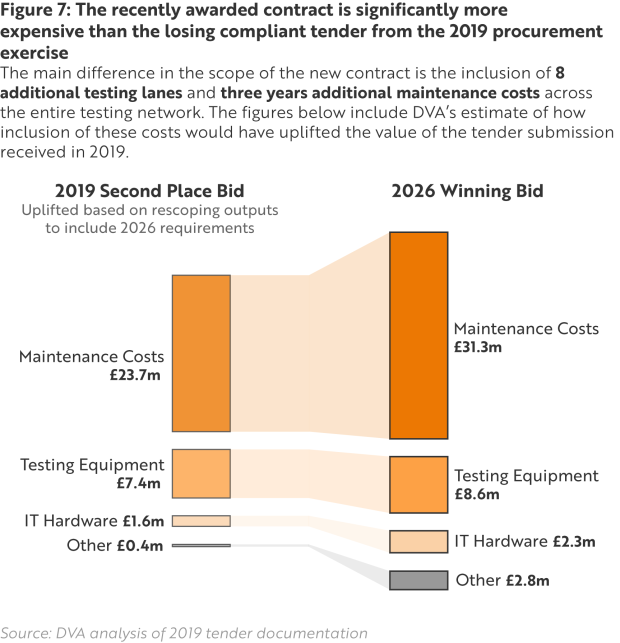
4.11 This analysis highlights that the main areas of increase relate to maintenance, vehicle testing equipment, and additional enabling works costs. One of the key reasons for the increase in costs has been the increase in material and equipment prices as a result of inflation since the initial contract.
DVA and CPD identified lessons from the failed contract
4.12 DVA and CPD both undertook lessons learned exercises following the breakdown of the original contract. Through those reviews both organisations identified weaknesses relating to contractual clarity, software development assumptions, deliverability testing and the absence of clearly defined and enforceable delivery milestones.
4.13 DVA’s review focused primarily on technical and delivery issues. It concluded that future procurements should place greater emphasis on software development requirements, testing arrangements, certification requirements and the specification of key milestones and delivery dates. DVA also identified lessons relating to system integration, management of pilot testing arrangements and the allocation of responsibilities for infrastructure and enabling works.
4.14 CPD’s review focused more heavily on contractual and governance issues. It identified the need for contractual milestones and delivery dates to be expressed in clear and legally enforceable terms. CPD also concluded that greater attention should be given to the management of contract variations and ensuring that changes to agreed scope, timelines and deliverables are formally documented and approved.
4.15 Taken together, these findings reflect many of the issues discussed in Parts Two and Three of this report. While the lessons learned exercise identified improvements to future procurement and contract management, some of the lessons appear relatively fundamental in nature. The Department stated that key dates could not be included in the initial contract because delivery was dependent on the wider construction project. However, following the contract’s failure, the lessons learned exercises concluded that future contracts should include key dates and targets. This indicates that aspects of the contractual arrangements may have contributed to the issues encountered, alongside the implementation challenges that arose during delivery. Figure 8 summarises the main lessons identified by DVA and CPD.
Figure 8: Lessons Learned by DVA and CPD following failed contract
| DVA Lessons Learned | |
|---|---|
| Contract | Any future contracts must contain an element on software development and appropriate ICT clauses within the contract and specification terms. Any future contracts must have key dates and targets included. |
| Software Development | The tender document was amended to include strong IT development and mid-tier IT conditions of contract were included in the new tender documentation. The tender documents were reviewed by both CPD and solicitors representing DVA to ensure the DVA were covered for IT development and security. |
| Software Testing | The new tender documents would highlight that the use of Development and Operations (DevOps) would be a requirement for the contract. DVA stated it tried to educate the contractor on the use of agile IT. This has been stipulated in the new tender contract. |
| Pilot Test Lane | The pilot test lane is to be provided by the new contractor at no cost to DVA. This will incentivise the new contractor to ensure the pilot test lane is installed, the IT development carried out, and the contractor will only receive any payment once the pilot test lane has been accepted. |
| Prefabricated Pit | It was decided after Mallusk was designed and contract awarded to Integrated Supply Team (IST) that any future new build test centres, the prefabricated pit would be included in the contract for the building of the test centre and the design, installation and maintenance of the pit would lie with the IST. |
| Equip Installation/ Calibration/ Commissioning/ Testing | All new builds installation will take place after the test centre has been handed over to the DVA. |
| Security Clearances | This is a current contract issue where contracts are awarded to companies based outside the UK. The DVA will work with the Department’s Security Officer if this is a requirement going forward. |
| Certifications – Equipment and ISO Standards | DVA contract management team review the required certificates annually and address any expired certificates with the suppliers. |
| CPD Key Learning |
|---|
| Include reference in specification to project delivery plan (and key milestones) and/or install and commission dates and include as defined terms in conditions of contract to ensure no legal ambiguity and close loop. |
| Record and implement changes to the agreed timetable via a contract variation/ change control notice signed by both parties. |
| Commercial and contract management training to include understanding of what constitutes a contract variation and importance of the contract variation mechanism to ensure no legal ambiguity. |
| Handover document to be updated with more explicit prompt on contract variations, what may constitute a variation (timescales, cost, deliverables etc) and importance of written agreement. |
| A project lessons learned report should be drawn up with input from Supplies and Services Division (SSD) and DVA. This can be disseminated within both organisations. |
Source: DVA and CPD summarised by NIAO
Lessons from the failed contract influenced the replacement procurement
4.16 We have not subjected the procurement process applied to award the replacement contract to full audit procedures in the course of this engagement. However, as part of this review we have sought to confirm that there is evidence available to demonstrate that both DVA and CPD have ensured that the lessons emerging from the initial failed contract have been addressed in the design of the replacement contract. We found that, in contrast to the original procurement, the replacement contract contains more detailed and explicit provisions relating to software development, IT architecture and system integration. It also includes stronger testing, commissioning and acceptance arrangements, reflecting concerns that emerged during implementation of the original ITL solution.
4.17 The replacement contract also contains a more structured framework for managing delivery. Roles and responsibilities are more clearly defined, delivery phases are more explicit, and milestone requirements are embedded more directly within the contractual documentation. These changes reflect learning arising both from DVA’s operational experience and from the High Court’s findings regarding contractual enforceability. The replacement procurement therefore provides some assurance that learning has been identified and acted upon at an organisational level.
Learning from this case should be systematically captured and shared across the public sector
4.18 One of the most important sources of learning arising from this contract is the legal challenge associated with DVA’s attempts to terminate it. Legal proceedings provide a particularly valuable source of procurement learning because they test how contractual arrangements are likely to be interpreted and enforced when disputes arise. This creates opportunities to identify weaknesses that may not become apparent during routine contract management activity.
4.19 The High Court proceedings provided detailed scrutiny of how the contractual provisions operated in practice and highlighted weaknesses relating to delivery obligations, milestones and termination provisions that had not been fully understood when the contract was originally designed.
4.20 The issues highlighted by the Court concerning contractual clarity, milestone management and enforceability have potential relevance across a wide range of public sector procurement activities. Without arrangements to systematically capture and share this learning, there is a risk that similar weaknesses may persist in future contracts.
4.21 We understand that the Heads of Procurement Group has established a Legal Lessons Learned Register that is intended to capture and disseminate learning from procurement disputes and legal challenge. At the time of our review, however, we were informed the issues arising in this contract had not been recorded on the Register and it was not yet consistently updated.
4.22 Given the significance of the issues identified through this contract, fully implementing these arrangements would provide an important mechanism for ensuring that lessons arising from procurement failure, legal challenge and contractual dispute are applied more consistently across the public sector. More generally, it is important that the Register is used to ensure that important learning is disseminated.
Recommendation 4
Lessons arising from significant procurement failures should be systematically disseminated across the public sector.
Construction and Procurement Delivery’s Policy and Performance Division, working with the Heads of Procurement Group, should ensure that existing arrangements for capturing and sharing procurement lessons are fully implemented and actively used. This should include implementing a process across the public sector whereby the systematic dissemination of learning from procurements involving significant delivery failure, legal challenge or material contractual weaknesses is shared on a timely basis.