Key Facts for the Financial Year 2024-25
Audit Opinions
All 11 local councils
received unqualified audit opinions on their financial statements
All 11 local councils
received unqualified audit opinions on their Performance Improvement work
Income and Expenditure
£1.3 billion
Total council income, of which more than 60 per cent (£818 million) is income from District Rates
£1.2 billion
Total council expenditure, of which over 40 per cent (£500 million) relates to staff costs
Financial Position
£2.5 billion
Total value of land and buildings held by local councils
£566 million
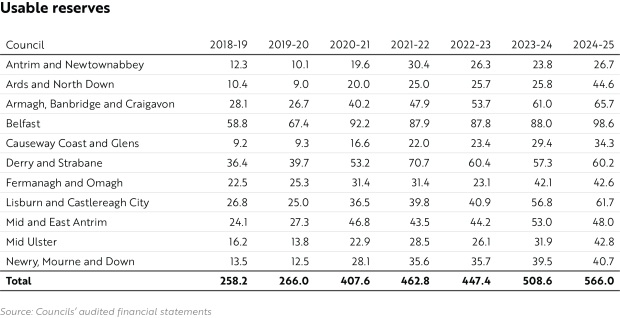
Total usable reserves across local councils (the highest level recorded)
£424 million
Total council outstanding longer-term debt
Audit findings
Council income and expenditure for the year ended 31 March 2025
Financial position of Councils at 31 March 2025
Other areas of interest
Other Audit Findings
16.8 days
The average absence per council staff member
£903,000
The value of suspected frauds reported to the Local Government Auditor
Major planning applications
Average processing time of 39.6 weeks (against a target of 30 weeks)
Local planning applications
Average processing time of 19.8 weeks (against a target of 15 weeks)
Recommendations
Recommendation 1
Councils have responded positively to the majority of recommendations made by the Local Government Auditor in recent years. However, there are areas where some councils have not yet fully implemented all recommendations applicable to them. I welcome the ongoing collaboration across councils and recommend that this continues so that learning and good practice can be shared in order to fully implement recommendations across all councils.
Recommendation 2
I recommend that all councils ensure they have clear capital asset plans in place which set out the effective and efficient management of surplus assets.
Recommendation 3
I recommend that all suspected or actual cases of fraud are reported promptly to me and that all councils report annually to their Audit and Risk Assurance Committee on their disclosure of suspected or actual fraud cases.
Recommendation 4
I recommend that all local government bodies ensure that they are fully compliant with the principles that are contained within NIAO’s good practice guide on ‘Effective Audit and Risk Assurance Committees’.
Recommendation 5
I recommend that all councils review their sickness absence levels and implement an action plan to reduce these in order to achieve better value for money for the ratepayer. I encourage councils to continue to collaborate and share good practice for reducing sickness absence levels.
Recommendation 6
I recommend that all councils design and implement action plans to achieve outcomes in line with the statutory planning processing targets, particularly for those councils still performing well outside these. I encourage councils to work together and learn from those who are achieving the planning targets.
Local Government Auditor’s Preface
1. The Department for Communities (the Department), with the consent of the Comptroller and Auditor General for Northern Ireland (the C&AG), designated me as the Local Government Auditor in January 2026. As Local Government Auditor, it is one of my responsibilities to provide an opinion on the financial statements of the 11 councils in Northern Ireland. I am also required to prepare an annual report on the exercise of my functions.
2. This is my first report as Local Government Auditor following the retirement of Colette Kane OBE. I wish to formally thank my predecessor for her steadfast work and commitment through a period of significant change for the local government sector. This report is based on the 2024-25 audits of all local councils, which was my predecessor’s last financial audit cycle before retirement.
3. This report provides my perspective on local councils, based upon the findings of the various audits conducted across the 2024-25 financial year. My report highlights both the ongoing progress made by councils and economic pressures that have posed a significant challenge to sustainable service delivery by councils.
- Part One of my report provides an overview of the key findings from the financial audit of local government in 2024-25.
- Part Two summarises the impact of Local Government Auditor recommendations from the previous three years.
- Part Three of my report details the financial performance of councils.
- Part Four identifies the challenges and opportunities that have emerged from our audit work during 2024-25.
4. Throughout this report, I have made a number of recommendations aimed at supporting improvements arising from audit work conducted during the 2024-25 financial year. I encourage council Audit and Risk Assurance Committees to monitor councils’ progress on implementing these recommendations.
5. The Code of Audit Practice was laid before the Northern Ireland Assembly under Article 5(7) of the Local Government (Northern Ireland) Order 2005 by the Department for Communities on 24 February 2026 and approved by a resolution of the Assembly on 14 April 2026. The Code sets out the framework for auditing local government bodies in Northern Ireland and will be in place for the next five years. I have also published a Statement of Responsibilities of the Local Government Auditor and Local Government Bodies in April 2026. The Statement of Responsibilities summarises the terms and responsibilities between the Local Government Auditor and local government bodies.
6. I have complied with the legislation which requires me to publish Annual Improvement Reports for each council detailing my assessment of councils’ compliance with Part 12 of the Local Government Act (Northern Ireland) 2014. These reports were published on NIAO’s website on 31 March 2026.
7. The C&AG published a report “Northern Ireland City and Growth Deals” in July 2026. The report examines and assesses the governance and accountability arrangements in place for capital investment, with a particular focus on how public expenditure is being managed across central and local government. Given the importance of capital investment to the local government sector, I encourage all councils to review this report and I will continue to monitor the delivery of capital projects in the sector as part of our ongoing work.
8. The 2024-25 year was the tenth year of the current councils since reform in 2015. Councils have identified ongoing and future challenges regarding funding, increased cyber risk and climate change commitments. These challenges will require strong leadership and governance from councils, both members and officers, to ensure success. As I begin my role as Local Government Auditor, I look forward to working with the sector, providing guidance where possible, and thank them for their assistance and co-operation in completing this report.
Brian O’Neill Local Government Auditor
Part One:
Audit findings
1.1 This section of my report provides an overview of the key findings from the financial audit of local government bodies in 2024-25.
Review of Financial Statements for the year ended 31 March 2025
1.2 Councils have a statutory duty to prepare an Annual Report and Accounts and submit these to the Department for Communities and the Local Government Auditor by 30 June each year. I am required to audit each council’s financial statements in accordance with the Local Government (Northern Ireland) Order 2005 and the Local Government Code of Audit Practice by 30 September each year and report the results to the Members of each council. In 2024-25, this reporting timetable was achieved for all councils, except Belfast City Council which was not certified until 23 January 2026, due to a number of specific areas of concern which required additional time and resources to complete the audit.
1.3 Three of the eleven councils prepare Group Financial Statements (Belfast City Council, Derry City and Strabane District Council and Mid Ulster District Council). In previous years, an emphasis of matter paragraph was included in Derry City and Strabane District Council’s Audit Certificate in respect of the risk of going concern in relation to the City of Derry Airport (CODA) which is consolidated in the Council’s financial statements. An emphasis of matter paragraph is not a qualification but is added to indicate a matter (in this case, the risk of going concern of CODA) which was disclosed appropriately in the notes to the financial statements, as this is fundamental to the ‘users’ understanding of the financial statements. The emphasis of matter paragraph included in prior years has been removed in 2024-25 due to the improvement in the stability of CODA’s funding and forward work programme.
1.4 I note that all council Chief Executives (Chief Financial Officers) signed the financial statements for the year ended 31 March 2025, except for Armagh City, Banbridge and Craigavon Borough Council. Due to the absence of the Chief Executive (who is the Chief Financial Officer), Armagh City, Banbridge and Craigavon Borough Council approved the appointment of the Deputy Chief Executive as the designated Chief Financial Officer at the September 2025 full Council meeting in accordance with Section 1 of the Local Government Finance Act (NI) 2011. As a result, the Deputy Chief Executive was authorised to exercise all statutory powers and responsibilities of the Chief Financial Officer and signed the financial statements.
1.5 Unqualified audit opinions were issued for all 11 councils upon completion of the 2024-25 audits of council financial statements. The Local Government Auditor identified a range of issues and made a significant number of recommendations for improvement, including:
- Priority 1 recommendations, which reflect significant issues for the attention of senior management which may have the potential to result in material weakness in internal control; and
- Priority 2 recommendations, which are important issues to be addressed by management in their specific areas of responsibility.
1.6 The recommendations across the 11 councils spanned various areas, including:
- weaknesses in the financial control and reporting environment;
- significant lists of unreconciled items in some bank reconciliations and some monthly bank reconciliations not completed;
- weaknesses around procurement and contract management;
- errors in accounting for fixed asset valuations;
- lack of evidence of regular reviews of user access profiles for some IT systems;
- lack of progress in addressing Internal Audit recommendations;
- inadequate working papers provided to support figures within the financial statements;
- IT health checks not being carried out on some line of business applications;
- non-compliance with HMRC VAT reporting requirements;
- exit packages not in agreement with the agreed policy; and
- councillors not returning Declaration of Related Party transaction forms.
1.7 It is important that councils take appropriate action to address these recommendations. I would also highlight that most of these areas have often been the subject of findings within the Comptroller and Auditor General’s Report on Financial Audit Findings – Central Government which is published annually. This highlights how both sectors can face broadly similar issues and challenges and need to continually consider how risks in these areas can be controlled and mitigated.
1.8 During the audit of Lisburn and Castlereagh City Council, several recommendations were made by the Local Government Auditor relating to incorrect VAT returns submitted late to HMRC covering the period October 2024 to May 2025. This resulted in the Council understating the amount of output VAT. The Council advised me that these issues arose from configuration problems with its new accounting system which was implemented in September 2024.
1.9 The issue was first raised by HMRC in November 2024 who queried the September 2024 VAT return. Upon investigation, it was found that the return contained a number of errors arising from the incorrect configuration of the accounting system. The Council liaised with HMRC over a number of months and the September 2024 claim was eventually settled. Subsequent returns also contained errors which have since been resolved and corrected returns submitted.
1.10 In August 2025, HMRC notified the Council of its intention to issue a penalty, on the basis that, in its view, the Council had acted deliberately in under-declaring VAT. The Council has disputed this and is engaging external consultants to assist in challenging HMRC’s position.
1.11 Given the seriousness of this issue, I will continue to monitor the position and the actions that the Council takes to address the system issues that resulted in this penalty arising. In implementing or updating any IT system, it is important that all risks are identified and managed and appropriate controls are put in place to ensure no significant issues arise.
Proper Arrangements
1.12 The Local Government (Northern Ireland) Order 2005 requires the Local Government Auditor to be satisfied each year that local government bodies have appropriate arrangements in place to ensure they achieve economy, efficiency and effectiveness (value for money) in their use of resources:
- Economy – careful management of resources, keeping costs as low as possible whilst meeting appropriate standards and objectives;
- Efficiency – obtaining an optimal relationship between the resources used and the outputs/impacts achieved; and
- Effectiveness – achieving alignment between intended and actual outcomes.
1.13 To demonstrate they are meeting these requirements, I require councils to complete an annual questionnaire detailing the arrangements they have in place. Councils are also required to provide me with supporting documentation to evidence their processes and procedures. This questionnaire covers a wide range of key corporate activities, including financial planning and reporting, IT security, procurement policy and procedures, risk management and governance arrangements. This process has helped me identify some areas where councils have not fully implemented adequate arrangements to ensure economy, efficiency and effectiveness and recommendations for improvement have been made, including:
- a number of important policies and procedures need to be updated;
- agreement of the Minimum Revenue Provision Statement in accordance with the requirements of the Prudential Code;
- fraud training to be provided to council staff and members;
- some council ICT systems not being ISO 27001 accredited; and
- some councils not having any formal cyber security accreditation in place.
Annual Audit Letters
1.14 Following each audit, an Annual Audit Letter is issued to each council and published on their website. The Annual Audit Letter provides a summary of the financial and performance audits undertaken, highlighting key areas, issues identified and also reporting on the outlook for all councils with the common pressures relating to funding, cyber risks and climate change.
1.15 Some key issues arising from the 2024-25 Annual Audit Letters issued to councils include the following areas:
- In Armagh City, Banbridge and Craigavon Borough Council, in 2022-23, the Council withdrew an application for Judicial Review of the Knock Iveagh planning decision and issued an enforcement notice against the operator and the landowner of the site. The operator of the turbine continued to receive an income in the form of Renewable Obligation Certificates. The total legal and professional costs in relation to this case incurred up to 2023-24 was £1,288,000 with additional costs of £18,000 incurred during 2024-25. The Council has made a provision in its 2024-25 financial statements in relation to this complex matter and I will continue to monitor this.
- In Ards and North Down Borough Council, since 2022-23, following the vesting of the former Ards Leisure Centre, £1.8 million due to the Council from the Department for Infrastructure (DfI) has not yet been paid. The Council is content that it has fulfilled all of DfI’s requirements and that all the money will be received. I will continue to monitor this and liaise with the DfI central government audit team to try to bring this to a resolution.
Other Local Government Bodies
1.16 Unqualified opinions were also issued in 2024-25 for the four other local government bodies for which I am responsible:
- the Local Government Staff Commission;
- Arc21;
- Northern Ireland Local Government Officers’ Superannuation Committee; and
- the North West Region Waste Management Group.
1.17 The planned dissolution date for the Local Government Staff Commission is 31 March 2027 and the Commission is engaging with the Department for Communities to support arrangements for dissolution.
Part Two:
Measuring the impact of the Local Government Auditor’s recommendations
2.1 Each of the previous Local Government Auditor’s annual reports have contained a number of recommendations that are aimed at strengthening governance or improving the overall performance of local government bodies. As part of this report, I have reviewed the impact made by these recommendations over the last number of reports.
2.2 The actions taken by local councils in response to these recommendations have improved council performance in a number of areas and demonstrate the positive impact of our work. The recommendations that are outlined in this section demonstrate these impacts.
Improved fraud reporting
2.3 Effective fraud reporting arrangements are an important part of good governance and help to ensure transparency for ratepayers. Inconsistent or delayed reporting of suspected or actual fraud can weaken oversight, reduce accountability, and limit the ability to identify weaknesses that could potentially impact across the public sector.
2.4 In previous reports, the Local Government Auditor recommended that all councils:
- review their fraud reporting practices to ensure they are effective, consistent, and aligned with best practice;
- ensure that any suspected or actual fraud is promptly reported to the Local Government Auditor; and
- should also report annually to their Audit and Risk Assurance Committee on fraud disclosures.
2.5 I welcome that, in response to these recommendations, all councils have told me that frauds are now reported to their own Audit and Risk Assurance Committee and to me. These improved arrangements will strengthen governance, improve transparency and support learning from fraud risks. They will also provide Audit and Risk Assurance Committees with clearer assurance over the effectiveness of fraud prevention and detection arrangements.
Improved arrangements for raising concerns
2.6 Robust arrangements around raising concerns are essential to ensure that both staff and public feel confident in reporting concerns without fear of reprisal. Policies that are outdated or not well understood can reduce their effectiveness and increase the risk that issues go unreported. Without policies that give people confidence to raise concerns, organisations may miss out on an important source of information that may highlight serious risks, potential fraud or corruption.
2.7 I note that to date, one council still has to finalise updating its raising concerns policy and would again recommend that all councils should review and update their raising concerns policies to ensure alignment with NIAO guidance and best practice, supported by appropriate communication and training. NIAO has recently published revised guidance on raising concerns which all public bodies should ensure they are complying with.
Strengthening the management of sickness absence
2.8 High or increasing levels of sickness absence can adversely affect service delivery, staff wellbeing and organisational productivity. Without proactive management and the implementation of best practice, there is a risk that councils may miss opportunities to identify and address underlying causes or provide the necessary support to employees.
2.9 In previous reports, the Local Government Auditor recommended that councils review their sickness absence trends to identify key problem areas and consider whether best practice management approaches could be applied to try and improve operational productivity and reduce sickness absence.
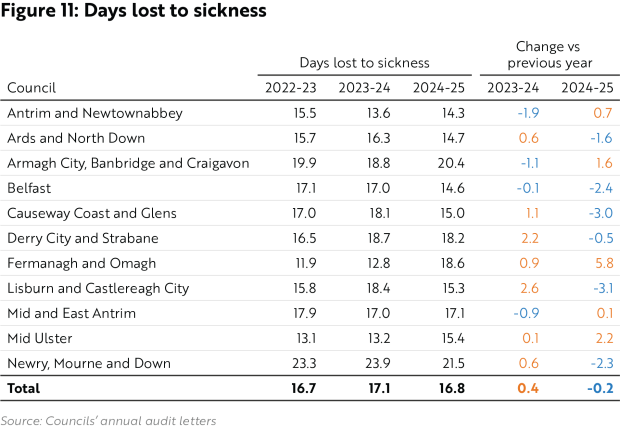
2.10 Councils have told me that they continue to actively monitor sickness absence rates. For those councils with decreased sickness absence rates, I welcome that effective actions taken include the development of staff support programmes, with a particular focus on mental health first aid, and the continued monitoring of attendance statistics. Five councils have however reported an increase in sickness absence rates in 2024-25 and it is a concern that sickness absence levels in local government are considerably higher than in central government. Managing sickness absence in local councils is highlighted in Section 4 of this report.
Improving the performance of the planning system
2.11 Timely processing of planning applications is critical to supporting economic development and public confidence in the planning system. It is important that statutory targets are met so that delays for applicants and developers do not arise.
2.12 In previous reports, the Local Government Auditor recommended that councils should consider refreshed and targeted actions to improve planning performance, particularly where processing times remain significantly outside statutory targets.
2.13 Improving the performance of the planning system will enhance service quality, and better support growth and development across council areas. Councils have noted a number of actions taken to address these issues, including the use of validation checklists to streamline the process and identify quality issues in the applications. Other measures adopted include strengthened collaboration between councils and the Department for Infrastructure and statutory consultees. The performance of local councils in processing planning applications is highlighted in Section 4 of this report.
Improving access to procurement expertise
2.14 Increasingly complex and high-value capital projects require specialist procurement expertise that may not be available within individual councils. Fragmented approaches can lead to inefficiencies, skill gaps and challenges in retaining experienced staff. Better pooling of resources could lead to maximising scarce specialist skills, improving capacity for major projects, and the delivery of a more resilient and efficient procurement function across the local government sector.
2.15 In previous reports, the Local Government Auditor recommended that councils should explore opportunities to pool procurement staff and expertise through formalised cross council arrangements. I welcome that councils have responded positively to this recommendation and have noted a number of instances of participation in joint projects. Councils told me that the Local Government Procurement Group meets regularly and that cross-council participation in exercises including Insurance, Internal Audit Support, VAT Support and Treasury Management have taken place. Based on these responses, I see a clear opportunity to formalise cross-council arrangements to encourage participation without a significant strain on resources.
Improving the governance of procurement
2.16 Strong procurement governance is essential to ensure value for money, compliance with regulations, and protection against fraud and error. Outdated or inconsistently applied policies can increase risks to each local government body.
2.17 Based on previous audit findings, the Local Government Auditor recommended that councils should undertake regular and comprehensive reviews of procurement policies and practices to ensure alignment with current governance standards.
2.18 A number of councils told me that as a result of this recommendation, they have reviewed their procurement policy and subsequently either updated the policy or concluded that it was already considered fit for purpose. In a number of other councils, policies remain under review.
Monitoring and reporting contract overspends
2.19 Without effective monitoring of contract expenditure, councils may be unaware of emerging overspends or inefficiencies. Poor oversight of contract performance also limits management’s ability to take corrective action, if required.
2.20 The Local Government Auditor previously recommended that councils should ensure they have proportionate arrangements for monitoring and reporting contract overspends to relevant committees, supported by reliable management information systems.
2.21 Improved oversight supports better financial control, earlier intervention and stronger assurance over value for money. The majority of councils told me that contract monitoring is now facilitated through financial management system software which alerts users to contract overspend, can facilitate spend limits and reports on expenditure data trends. In a number of other councils, action is now being taken to strengthen monitoring through further digitalisation or IT system development.
Improving the governance around Direct Award Contracts
2.22 Direct Award Contracts (DACs) carry an inherent risk of reduced competition and weakened value for money if not tightly controlled. Inadequate governance can lead to inappropriate use of DACs and increased financial risk. Improved governance can reduce the risk of inappropriate procurement routes, strengthen compliance, and help ensure value for money is consistently achieved.
2.23 As a result of audit findings across a number of councils, the Local Government Auditor recommended that councils should ensure robust controls and governance arrangements are in place governing the use of DACs, alongside effective contract management processes. In response, all councils told me that they accepted this recommendation and confirmed that in their view DACs are now appropriately governed and controlled. This is an area that my staff regularly review as part of each annual audit.
Improving staffing data
2.24 Reliable workforce data is essential for effective workforce planning and addressing skills shortages. Incomplete or inconsistent data hampers strategic decision making and limits the ability to respond to emerging workforce risks. Reflecting this, the Local Government Auditor recommended that councils should review the robustness of their staffing data and explore opportunities for greater collaboration and flexibility in addressing workforce gaps.
2.25 I welcome that councils have responded positively to this recommendation, with a number reporting that baseline staffing data is now available and others that reviews of the organisational structure are either ongoing or have taken place. Some councils have reported that progress continues to be made in this important area including: the development of People Plans; a number of planned updates to the HR system; and strengthening the human resources team.
Strengthening the financial resilience of the sector
2.26 One key theme arising from our audit work was the financial resilience of the local government sector in Northern Ireland. As part of our audits, all councils were requested to complete a detailed questionnaire which covered a range of key themes: leadership, governance and culture; financial skills and capabilities; short-term budgeting and performance management; medium-term financial planning; and monitoring of financial performance.
2.27 Alongside the findings of this questionnaire, the Local Government Auditor recommended that:
- councils continue to use the questionnaire document as a reference tool for assessing their processes on an ongoing basis and, where necessary, take steps to strengthen and enhance these; and
- councils work collaboratively to strengthen areas of weakness and adopt good practice from each other.
2.28 In response, councils told me that they are all either using the questionnaire document as a reference tool for assessing their processes on an ongoing basis or have effective alternative reference tools in place.
Other recommendations
2.29 In addition to the areas listed above, the Local Government Auditor also made a number of recommendations including:
- improving the quality of data in the local government sector; and
- ensuring that councils continue to embed and monitor the effective operation of proper arrangements.
2.30 In both cases, councils told me that positive progress is being made and I will continue to monitor the position.
Recommendation
Councils have responded positively to the majority of recommendations made by the Local Government Auditor in recent years. However, there are areas where some councils have not yet fully implemented all recommendations applicable to them. I welcome the ongoing collaboration across councils and recommend that this continues so that learning and good practice can be shared in order to fully implement recommendations across all councils.
Part Three:
Financial Performance
3.1 This section of my report provides an overview of the financial position of local government in 2024-25.
Local government income continues to exceed expenditure
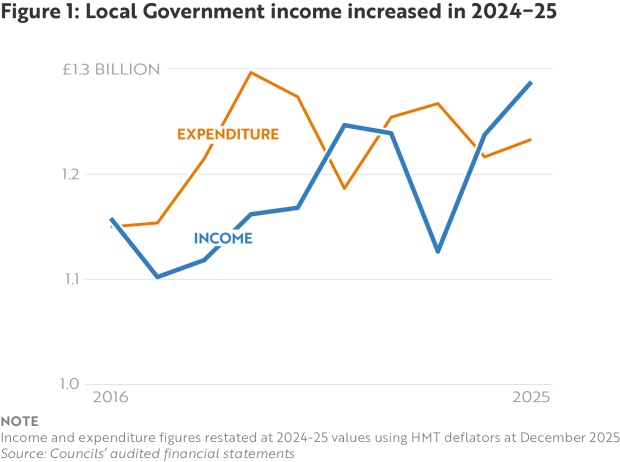
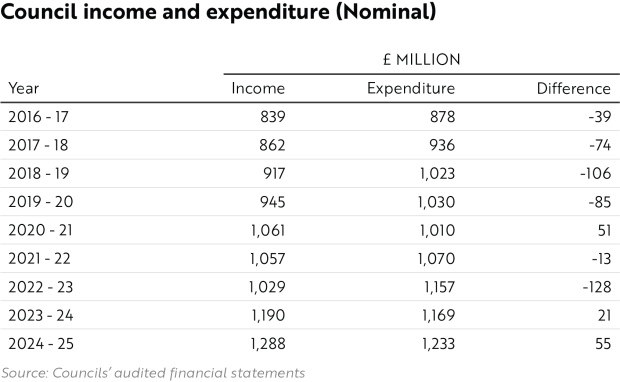
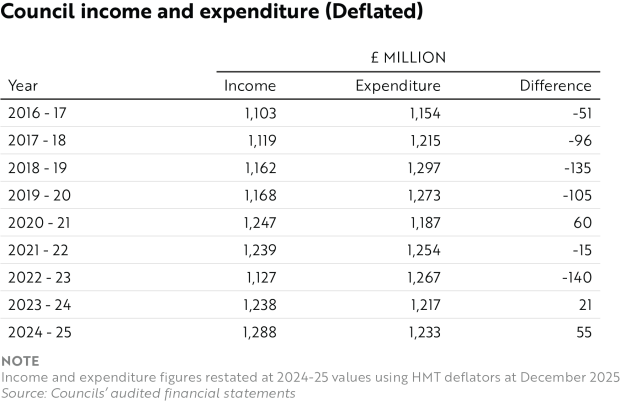
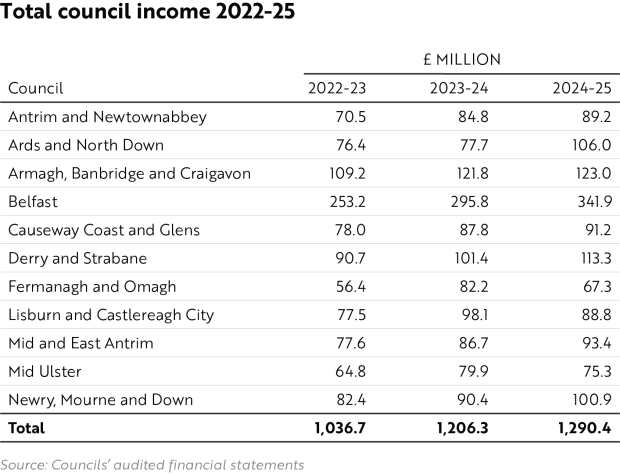
3.2 In the two financial years from 2021-22 to 2022-23, expenditure exceeded income in local government. However, in the last two years, councils in Northern Ireland have reported a surplus of income over expenditure (Figure 1). In 2024-25, total income generated across the 11 councils was almost 8 per cent higher than the previous year and 4 per cent higher than expenditure.
Councils receive the majority of their income from district rates
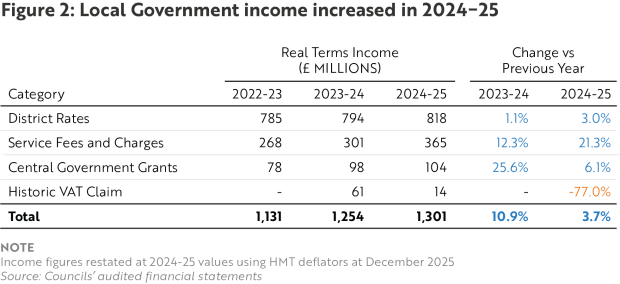
3.3 Councils generate income from three main sources: district rates; service fees and charges; and grants from central government. The proportion of income generated by councils from these sources is usually consistent each year. District rates typically account for around two thirds of council income, with around one quarter being generated from service fees and charges. The remaining ten per cent of council income largely relates to grants received from central government departments. Other significant receipts include income from proceeds on the disposal of assets, which has increased from £3 million in 2023-24 to £15 million in 2024-25, and £14 million relating to the conclusion of a significant sector-wide legacy VAT case. All 11 councils in Northern Ireland initiated legal proceedings against HMRC under a special legal regime for leisure sporting activities and in total received £74.7 million.
3.4 I note there has been some volatility in these patterns in recent years. The level of grants paid to councils by central government was significantly higher than usual in 2020-21 and 2021-22, as councils received additional support to help them manage the immediate economic pressures they faced, initially due to the COVID-19 pandemic, and subsequently as a result of inflationary increases in costs. Whilst not at the levels in 2020-21 and 2021-22, Central Government Grants have continued to increase in 2024-25 by 5 per cent or £5 million since 2023-24.
3.5 The overall increase in council income recorded in 2024-25 has been primarily driven by a 3 per cent increase in rates and a 21 per cent increase in fees, charges and other service income. Details on the breakdown of income across the categories, and year on year changes are set out in Figure 2.
District rates represent the largest source of income for all councils
3.6 District rates represent the largest source of income for all councils. Whilst there remains significant variation across councils, this variation has decreased since previous years (Figure 3). Reliance on district rates as a proportion of total income ranged from 58 to 68 per cent across councils in 2024-25. In 2023-24, district rates as a proportion of total income ranged from 51 to 77 per cent.
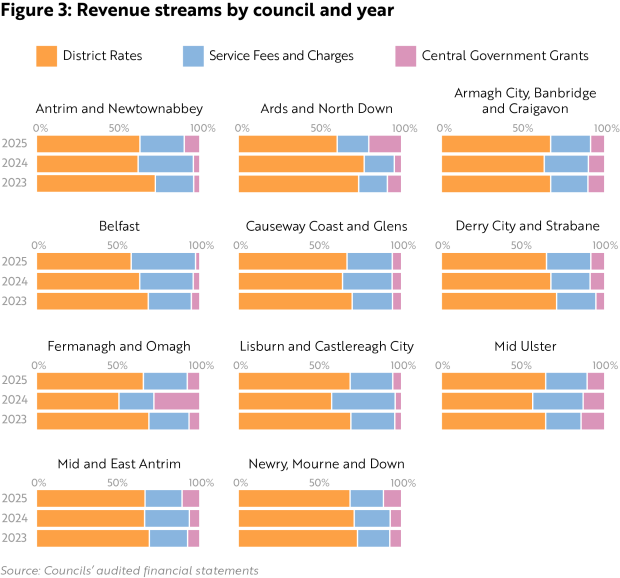
3.7 Last year, the Local Government Auditor reported that income generated by councils through charges and service fees increased for the first time since 2020-21. This income continued to increase by 21 per cent in 2024-25. Given the volatility of council income and expenditure over recent years, (see Figure 1) councils should consider exercising caution in allocating any 2024-25 surpluses, prioritising long-term financial resilience over short-term spending.
Overall council expenditure has increased in 2024-25
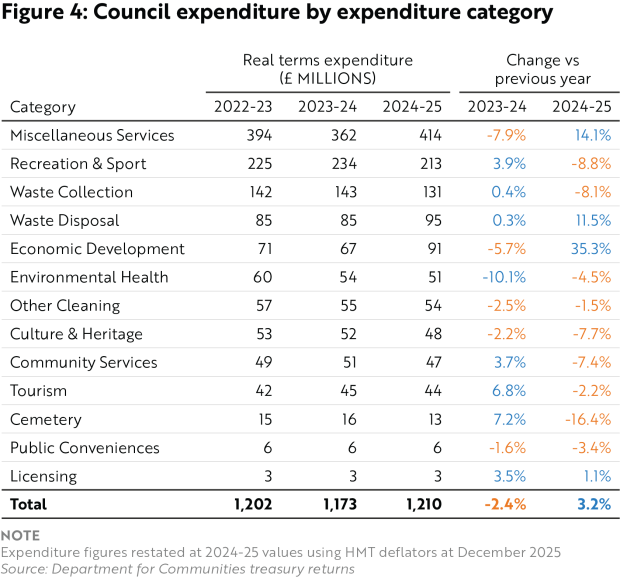
3.8 Overall council expenditure has increased by 1.3 per cent in real terms between 2023-24 and 2024-25 to £1,233 million. Of this, around £1,210 million is directly spent on services.
3.9 Meaningful comparison can be challenging. Councils are not required to manage and report their expenditure within a prescriptive or consistent framework. Instead, each council has freedom to tailor its financial reporting arrangements to its own particular circumstances. A disadvantage of this arrangement is that it is difficult to undertake any meaningful form of comparative analysis of this information between councils, or even at a more detailed level within individual councils.
3.10 In the absence of comparable data published by councils, I have included central analysis undertaken by the Department for Communities, which profiles local government expenditure against high-level common service areas (Figure 4).
Staff costs in local councils have remained consistent
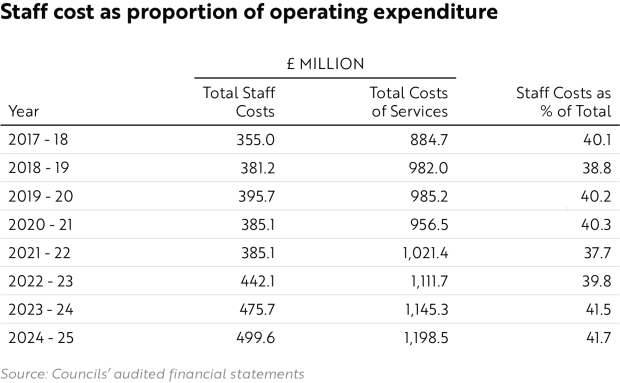
3.11 During 2024-25, total staff costs across councils amounted to approximately £500 million, compared to £475 million in 2023-24. These costs represented around 42 per cent of councils’ operational expenditure in 2024-25, which is in line with the proportion of operational expenditure consumed by staff costs in previous years. Further detailed analysis is included at Appendix 3.
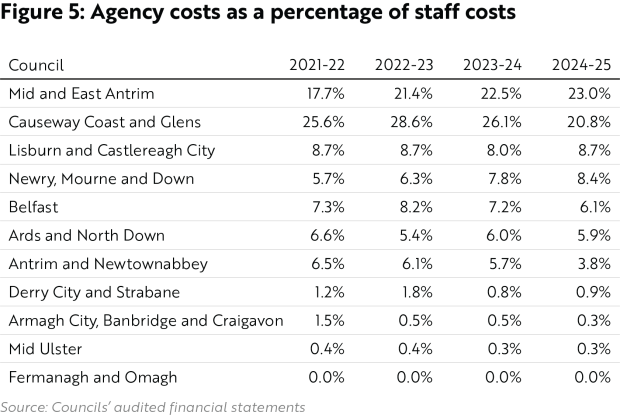
3.12 There are notable differences between councils in the proportion of staff costs spent on agency staff, with some councils incurring little or no spend on agency staff, while two councils (Mid and East Antrim and Causeway Coast and Glens) remain particularly reliant on agency staff (Figure 5). The impact of public health measures on a range of council functions meant that most councils spent significantly less on agency staff in 2020-21 than they had done in previous years. However, since then this expenditure has recovered to pre-pandemic levels. I consider it important that all councils, and particularly those spending a high proportion of staff costs on agency staff to support service delivery, continually review their requirements for agency staff and have appropriate oversight in place to ensure that these arrangements represent good value for ratepayers.
Capital expenditure remains below pre-pandemic levels
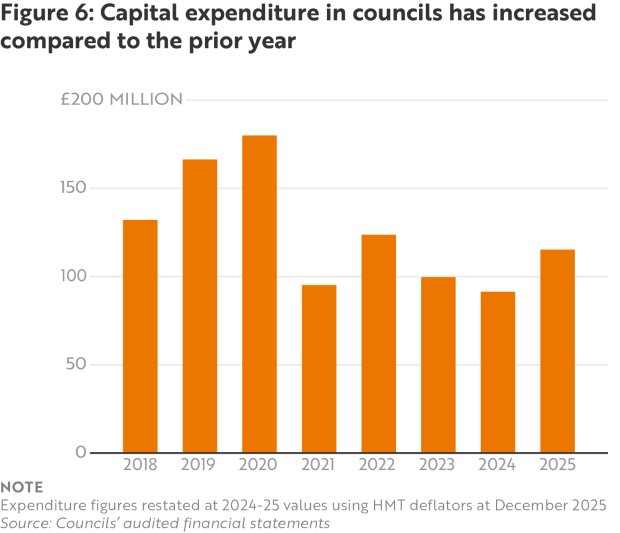
3.13 Capital expenditure is money used to purchase, construct or improve assets that are used by councils to support the delivery of services over a number of years. Given that such expenditure often relates to large-scale one-off projects, capital expenditure levels can fluctuate considerably between individual financial years. Identifying meaningful trends over time can therefore be difficult.
3.14 Capital expenditure across all councils has increased by 31 per cent between 2023-24 and 2024-25 to £115 million. However, I note that overall capital expenditure levels have been significantly lower across local government over the last five years compared to pre-pandemic levels (Figure 6). This can be expected given the substantial economic pressures and uncertainty that have impacted councils during this period.
Council borrowing decreased slightly in 2024-25
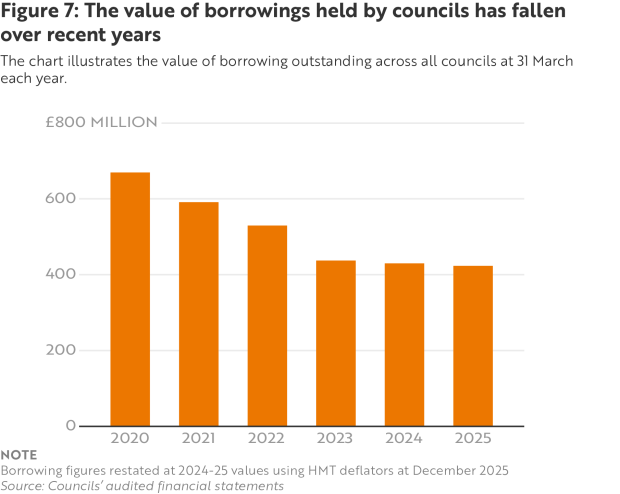
3.15 The majority of borrowing undertaken by councils relates to loans intended to finance capital expenditure. As such, a strong relationship exists between capital investment levels and borrowing trends. In line with the overall decrease in capital expenditure since the pandemic, borrowing by councils has also recently fallen. As a result, the total level of outstanding longer-term debt (loans repayable in more than one year) across councils has fallen by 2 per cent over the last year, from £430 million to £424 million (see Figure 7).
Councils’ reserves are at the highest level ever
3.16 Councils have two main types of reserves: usable and unusable.
- Usable reserves are cash balances that councils may hold and can be readily used to fund expenditure or reduce local taxation, subject to a statutory requirement to maintain a prudent level of reserves (although guidance on the level of recommended reserves has not been formally developed since the reform of local government).
- Unusable reserves are balances held by councils that are not readily available for use. Typically, such balances relate to unrealised accounting gains or losses (for example, when the market value of capital assets increases due to indexation or revaluation). Such balances only become usable once the balance is realised (for example, when a revalued asset is sold).
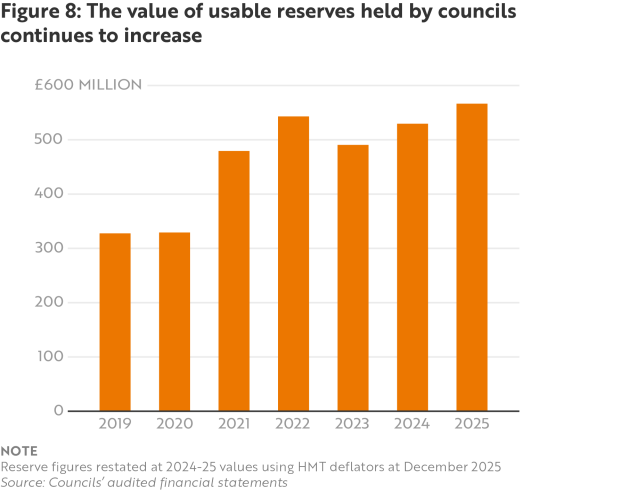
3.17 Significant increases to usable reserves were reported during the COVID-19 pandemic due to substantial support received from central government. As previously stated in paragraphs 3.2 to 3.6 above, income levels have increased and continue to exceed expenditure in 2024-25. This has contributed to an increase of 11.3 per cent in the overall value of usable reserves held by councils during 2024-25, totalling £566 million compared to £509 million in the previous year (see Figure 8).
The level of usable reserves held as a percentage of expenditure varies across councils
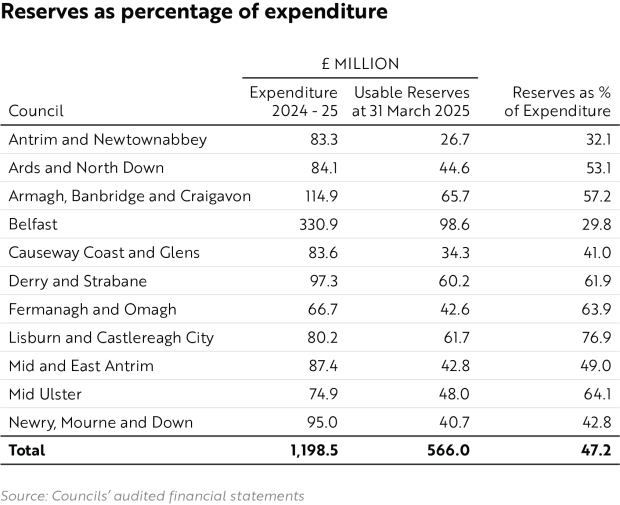
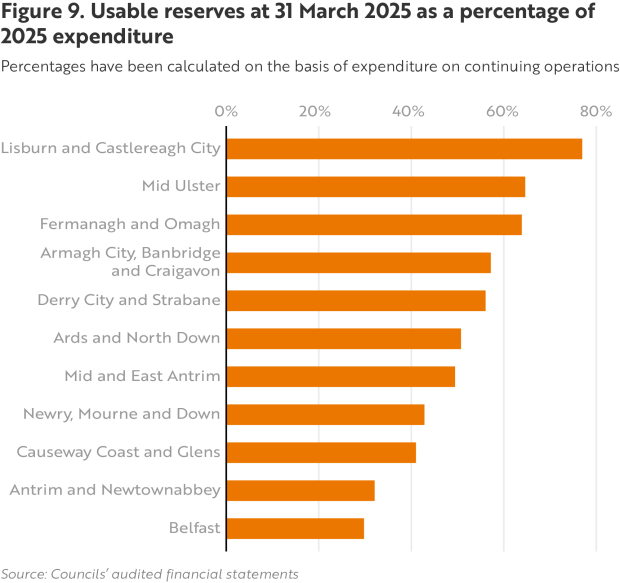
3.18 Our review of councils’ 2024-25 financial statements has shown that usable reserves held by councils in Northern Ireland are within a range of 29 to 76 per cent of expenditure (Figure 9).
3.19 Managing reserves over the medium-term is one of CIPFA’s (Chartered Institute of Public Finance and Accountancy) key pillars of financial resilience in local government. Councils must ensure that they have clear and robust plans in place for managing and using these reserves in a way that delivers maximum value and benefit for ratepayers. While the increase in usable reserves has strengthened councils’ financial resilience in the short-term, it also raises questions around the need for clear strategies for their future use and accountability to the ratepayer.
Councils hold more than £2.5 billion of land and buildings
3.20 A significant proportion of all local council balance sheets comprises fixed assets. In 2024-25, 85 per cent of all council assets comprised property, plant and equipment (PPE). In total, these amounted to assets valued at £3.1 billion.
3.21 The single largest category of assets held by local government is buildings. In 2025, Councils held £2.1 billion of buildings, and £467 million of land. As such, the local government sector is one of the largest landholders in Northern Ireland.
3.22 Councils can identify assets that they intend to dispose of in the next twelve months. This is an important part of asset management as sales of assets can be an important way of generating capital receipts and ensuring an efficient estate. When councils are committed to selling and believe they will dispose of an asset within a year, they are disclosed as assets held for sale. In 2025, local councils had £21.8 million of assets held for sale. This represents a significant increase from the £8.2 million held in 2023.
3.23 In contrast, councils also disclose some assets as “surplus”. These are assets that are no longer operational but have not yet met the criteria to be classed as held for resale. The amount of surplus assets held by councils has decreased from £29 million in 2023 to £21.7 million in 2025.
Recommendation
I recommend that all councils ensure they have clear capital asset plans in place which set out the effective and efficient management of surplus assets.
Part 4:
Challenges and Opportunities Arising
4.1 Over the last year my staff have worked alongside council officers to complete the statutory audits I am responsible for undertaking, as well as specific investigations in respect of emerging high-profile issues. This section of my Report highlights the key issues affecting council performance and governance which I have identified whilst undertaking this work.
Review of Annual Governance Statements
4.2 The Annual Governance Statement (AGS) is a key document through which local government bodies communicate to ratepayers, elected members and other stakeholders the key risks that the body is exposed to which may impair its ability to deliver on its objectives, as well as actions the body has taken to mitigate these risks.
4.3 Each body has autonomy to determine the content of its own AGS with the objective that they use this flexibility to ensure it provides meaningful commentary about their operating environment and the challenges they are facing.
4.4 In practice, however, many of the key issues or challenges that local government bodies encounter are common, and a substantial degree of overlap in terms of the risks which are identified and the responses which can be applied by those responsible for managing the bodies is to be expected.
4.5 There have been a number of common issues reported in the AGSs, such as:
- ongoing resourcing and capacity pressures;
- financial pressures;
- digital transformation;
- cyber security;
- control deficiencies in procurement and contract management; and
- information governance concerns arising from data breaches.
4.6 It is important that councils take appropriate action to manage and address these risks and opportunities. Given these are common issues and are pervasive risks across local government, I encourage cross-council collaboration where possible to mitigate against these risks and challenges.
Performance Improvement
4.7 The Local Government Act (NI) 2014 imposes a statutory responsibility on councils to make arrangements for, and to report on, continuous improvement in their functions or services. Such improvement should be more than gains in service output or efficiency, or the internal effectiveness of an organisation, and should enhance the sustainable quality of life and environment for ratepayers and communities. The legislation also places a statutory responsibility on me to conduct an ‘improvement audit and assessment’ annually and report my findings. This is carried out by reviewing each council’s self-assessment reports for the year gone by, and their current year improvement plans. My latest review therefore involved examining self-assessment reports for 2024-25 and improvement plans for 2025-26. I am required to report on whether each council:
- discharged its duties in relation to improvement planning;
- published the required improvement information;
- acted in accordance with guidance issued by the Department in relation to those duties; and
- was likely to comply with legislative requirements for performance improvement.
4.8 In the course of this annual audit work, I review the performance of each council against the targets it has set itself for that year as well the improvement plan it has set for the next year. Therefore, the most recent review was carried out in respect of actual performance during 2024-25 and the plan set for the 2025-26 year. In subsequent paragraphs this is referred to as the 2025-26 review.
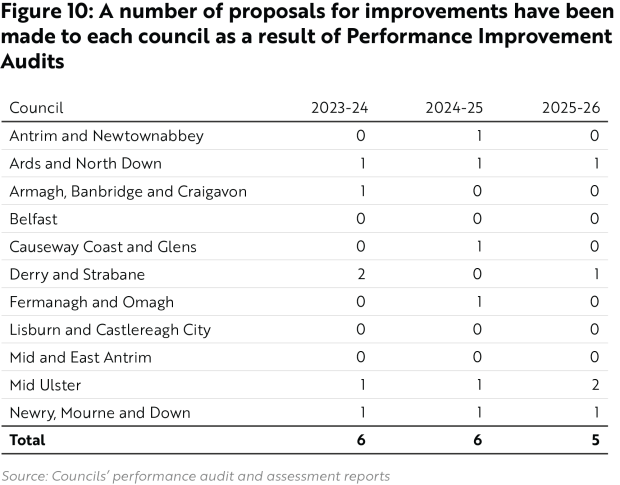
4.9 Unqualified opinions were issued for all local councils and identified five recommendations for improvement in 2025-26 (Figure 10).
4.10 Performance improvement legislation also requires me to compare performance improvement information amongst councils so far as is reasonably practicable. To meaningfully undertake this comparison, a consistent and appropriate framework for measuring and reporting performance is required across all 11 councils. The Department for Communities is progressing this work. Further progress in this area would allow a broader range of functions to be compared, to support councils with their General Duty to Improve in accordance with the legislation.
Fraud notifications
4.11 Published in November 2015, the NIAO best practice guide ‘Managing Fraud Risk in a Changing Environment’ was aimed at helping government bodies manage the widely accepted risk that the likelihood of frauds being perpetrated against organisations significantly increases during periods of significant change or crisis. As organisations alter working practices to respond to external changes, their risk management practices may not keep pace with change. This can create new areas of vulnerability whereby frauds that would otherwise have been prevented or detected may evade the systems of control.
4.12 The value of suspected frauds reported by councils in recent years has fluctuated significantly. In 2024-25, a value of £903,750 was reported to me (across five cases). This was a significant increase from 2023-24 when a value of £8,170 was reported. Furthermore, as only three of these five suspected frauds reported included an estimated value, the total value for 2024-25 may be higher.
4.13 One of the frauds reported to the Local Government Auditor last year relates to suspected contractor fraud. This has been notified to the PSNI and I will continue to monitor the progress and outcome of the investigation.
4.14 I would again highlight that it is unclear whether the cases reported to me represent the full extent of attempted frauds perpetrated against councils. Under Managing Public Money NI, all central government bodies are obliged to report any actual, suspected, or attempted frauds to both the C&AG and the Department of Finance. However, there is currently no similar mandatory reporting requirement in relation to local government.
4.15 In 2016, councils agreed to voluntarily report frauds to me on the same basis and through the same proforma used by central government bodies. However, I am concerned that compliance with this arrangement may have been inconsistent. Since 2016, some councils have reported very few instances of suspected fraud (two councils have only reported two cases, and another council has only reported three cases).
4.16 Reporting suspected frauds to me is very important in the context of helping to monitor the strength of the control environment in place across local government and assessing the sector’s vulnerability to fraud.
Recommendation
I recommend that all suspected or actual cases of fraud are reported promptly to me and that all councils report annually to their Audit and Risk Assurance Committee on their disclosure of suspected or actual fraud cases.
Raising Concerns Policies
4.17 Effective arrangements for raising concerns are an important element of good governance arrangements and are essential for helping to bring to light matters of concern in an organisation. Where concerns exist, those responsible must be held to account, mistakes must be remedied and lessons learnt.
4.18 NIAO has recently published a revised good practice guide on raising concerns, alongside a report on raising concerns in the Northern Ireland public sector. This guide encourages organisations to put in place effective arrangements for raising concerns. The guide outlines the key components of an effective Raising Concerns policy, along with best practices to ensure its successful implementation. These practices include ensuring those raising concerns are supported and protected from any form of detriment or victimisation, providing access to independent advice and ensuring timely and appropriate feedback is provided to the individual raising the concern.
4.19 Each year, as a prescribed person under the legislation, the Local Government Auditor receives a number of concerns about local government bodies. In 2024-25, only two cases relating to local government issues were received.
Effective Audit and Risk Assurance Committees
4.20 In March 2025, the C&AG published a good practice guide on ‘Effective Audit and Risk Assurance Committees’. All the principles of the guide are applicable to local government. The guide also contains a specific section that focuses on best practice in local government.
4.21 The constitution and membership of Audit and Risk Assurance Committees (ARACs) in local councils in Northern Ireland differs somewhat from central government public bodies. Core membership is made up of elected representatives and ARAC often has different titles and ancillary responsibilities, and reports to the Council rather than a Board. Notwithstanding these differences, they should strive to follow best practice in line with a central government ARAC.
Recommendation
I recommend that all local government bodies ensure that they are fully compliant with the principles that are contained within NIAO’s good practice guide on ‘Effective Audit and Risk Assurance Committees’.
Managing sickness absence
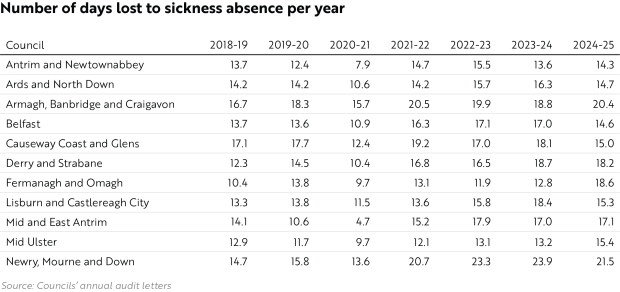
4.22 Staff sickness absence rates across the public sector were significantly impacted by the global pandemic. In all eleven councils, absence levels reduced during the early stages of the pandemic in 2020-21 to their lowest over the previous five years. However, as the pandemic ended and restrictions eased, this trend was reversing until 2024-25. In overall terms, the average 16.8 days absence per council staff member in 2024-25 is lower than the 17.1 days in 2023-24. This downward trend is also apparent across six of the eleven councils. (Figure 11 and Appendix 3).
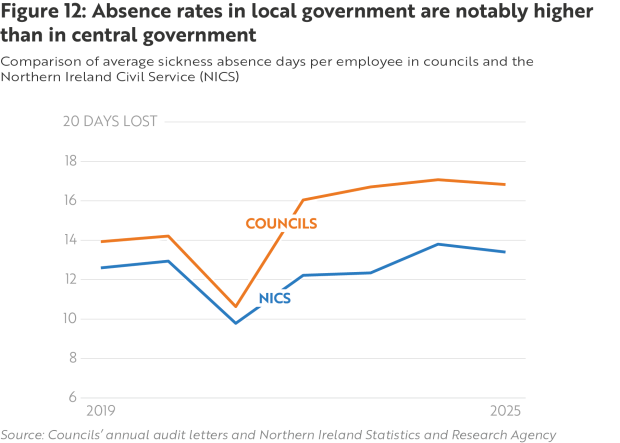
4.23 In January 2026, the C&AG published a report on Leading and Resourcing the Northern Ireland Civil Service which highlighted that an average of 13.4 days per staff member were lost in the sector during 2024-25. It is a concern that there is a continuing pattern of local government having notably higher sickness absence levels compared to central government. Prior to the pandemic the average number of days lost per employee to sickness absence (in 2018-19) was nine per cent higher in local government compared to central government (Figure 12 and Appendix 3). This increased to 24 per cent in 2023-24 and again to 25 per cent in 2024-25. I continue to emphasise the importance of closely monitoring and actively managing sickness absence levels to achieve improved operational efficiency and reduce the considerable productivity losses.
Recommendation
I recommend that all councils review their sickness absence levels and implement an action plan to reduce these in order to achieve better value for money for the ratepayer. I encourage councils to continue to collaborate and share good practice for reducing sickness absence levels.
Review of council restructuring
4.24 The Local Government Auditor previously reported that the Department should give early consideration and clear guidance to councils on devising an appropriate methodology for measuring efficiency savings and reporting outcomes relating to the reduction in the number of local councils which had taken effect in 2015. This reflected the importance of assessing the impact of the largest ever reform of local government in Northern Ireland.
4.25 The Department intended to complete a cost benefit analysis of local government reform during 2019-20. A series of delays, including the impact of the pandemic, meant it was November 2024 before the Department published a report titled “Impact of local government reform on service delivery and cost effectiveness”. The Department concluded that it was too early in the process to conclude if local government reform has been cost effective or not due to the lack of supporting data and limited scope for councils to fully realise benefits.
Rates Support Grant
4.26 The Local Government (Rates Support Grant) Regulations (Northern Ireland) 2011 enable the Department to pay an annual Rates Support Grant (RSG) to those local councils assessed as having needs that exceed their wealth relative to other councils in Northern Ireland. The RSG support is statutory, but is discretionary in terms of an amount.
4.27 Seven of the eleven local councils (Armagh City, Banbridge and Craigavon, Causeway Coast and Glens, Derry City and Strabane, Fermanagh and Omagh, Mid and East Antrim, Mid Ulster, and Newry, Mourne and Down) have consistently received discretionary assistance annually in accordance with the legislation. None of the other four councils have met the criteria for support in any year. This legislation includes a formula to help the Department calculate the share of funding eligible councils are entitled to receive. The overall level of support awarded through the formula has recently reduced, with the amount falling from £8.9 million in 2022-23 to £4.9 million in 2023-24, and to £3.1 million in 2024-25 and 2025-26.
4.28 In March 2024, the Department commissioned a review of how the RSG has been operating in practice from Innovation and Consultancy Services, part of the Department of Finance. The review considered issues including:
- whether the RSG remains fit for purpose in that the need it sought to address still remains;
- whether the initial policy intent remains relevant;
- if provision of the RSG meets the needs of people in the areas receiving it and whether other funding streams meet this need; and
- what councils use the RSG for.
4.29 The final report was provided to the Department in March 2025, concluding that the RSG is still required and recommending some changes to reporting and data sources. The Department intends to continue to provide the RSG, acknowledging that the level of funding will be dependent on budget availability.
Performance of local councils in processing planning applications
4.30 The planning system’s objective is to secure the orderly and consistent development of land whilst furthering sustainable development and improving wellbeing. It is designed to support the sustainable creation of successful places in which people want to live, work and invest. As it can contribute significantly to achieving key economic and social outcomes, it is vital that the system operates effectively. Responsibility for managing most of the main planning functions passed from central government to local councils during April 2015.
4.31 Following this, the C&AG and the Local Government Auditor jointly published a report ‘Planning in Northern Ireland’ in February 2022, which reviewed how the planning system was performing. It found that between 2017-18 and 2019-20, councils had not processed almost three quarters of “Major” planning applications (i.e. those categorised as having the potential to be of significant interest to communities) within the statutory 30-week target. Performance varied substantially across councils, with the median processing time for the slowest council more than three times that of the fastest. I note that the C&AG has continued to focus on this important area and published “A Strategic Review of the Planning Appeals Commission’’ in May 2026.
4.32 I would make the following observations on more recent trends:
Major planning applications
4.33 Overall performance – Between 2019-20 and 2024-25, the overall average time taken to process major applications across all councils has fluctuated from the high in 2020-21. It has decreased from an average processing time of 46.5 weeks in 2023-24 to 39.6 weeks in 2024-25. Whilst I welcome that some small improvement is evident in 2024-25, the statutory target requires all major applications to be processed within a 30-week timescale, and in 2024-25, 57 per cent of applications failed to meet this target (Figure 13).
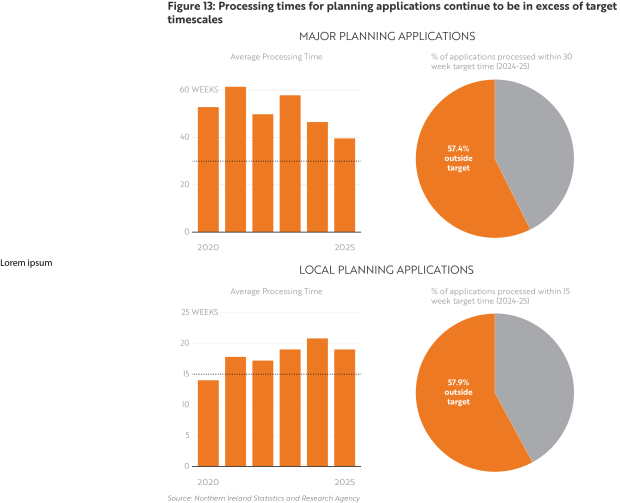
4.34 Variable performance across individual councils – Performance across different councils continues to vary widely. In 2024-25, the processing time of the worst performing council was 4.3 times more than that of the best performing council. The percentage of applications processed within 30 weeks also continues to vary significantly across councils. In 2024-25 only four of the eleven councils met the target of having an average processing time of 30 weeks or less.
Local planning applications
4.35 In addition to major applications, most planning applications submitted annually (around 98 per cent) are classified as ‘local’ applications (mostly relating to residential and minor commercial works). The statutory target is for councils to process these within an average of 15 weeks from the date of a valid application. In 2019-20, this target was met at overall NI level (average processing time was 14 weeks), with eight of the eleven councils also achieving it. However, since then, performance has slipped significantly.
4.36 Overall performance – Between 2019-20 and 2023-24, the overall average time taken to process local applications increased to 20.8 weeks. In 2024-25, the average processing time decreased slightly to 19.8 weeks. The percentage of applications processed within the 15-week target has also varied considerably over this period, from 50.9 per cent in 2018-19 to 42.1 per cent in 2024-25. Eight of the eleven councils failed to meet the 15-week target in the current year, with overall performance at all eleven councils falling short of the target since 2019-20 (Figure 13).
4.37 Performance again varies considerably across individual councils – In 2023-24, the average time taken to process local applications ranged from 5.8 weeks to 45.2 weeks. Eight of the eleven councils processed fewer than 50 per cent of applications within the statutory target of 15 weeks.
4.38 I acknowledge the pressures facing the planning system, with some decisions, particularly around major applications, becoming increasingly complex and requiring more interaction with those who have specialist knowledge or skills, including around assessing and managing environmental impacts. However, despite some small recent improvements for major and local applications, current performance remains well outside target levels, and the gap between the best and poorest performing councils remains too pronounced.
Recommendation
I recommend that all councils design and implement action plans to achieve outcomes in line with the statutory planning processing targets, particularly for those councils still performing well outside these. I encourage councils to work together and learn from those who are achieving the planning targets.
Appendix 1: Overall Council Income and Expenditure
Appendix 2: Council Income by Type
Appendix 3: Staff Costs
Appendix 4: Usable Reserves